



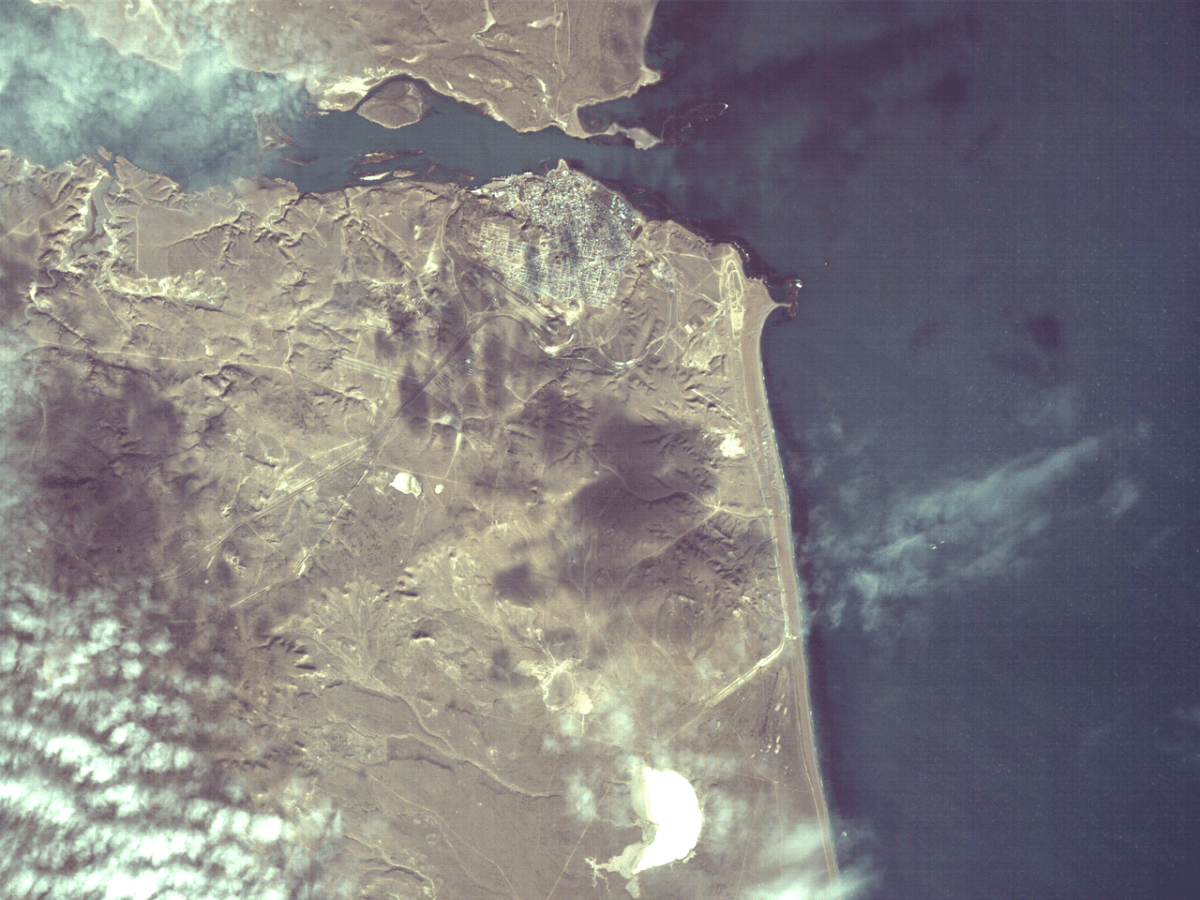
Autonomous Satellites: The New Era of Space Observation
An Earth observation satellite managed, for the first time, to find what it was looking for on its own, without the help of human analysts on the ground. This milestone, which happened in April, represents the pioneering use of a vision-language model in orbit. And this could radically change what space sensors are capable of.
Normally, satellites send large volumes of data to Earth, where analysts, with the help of machine learning or simply with their eyes, interpret the information. But Yam-9, a Loft Orbital satellite, did it differently. Using software developed by NASA's Jet Propulsion Laboratory, it was able to identify areas of interest in response to questions asked in natural language.
Gemma 3: Innovation in Orbit
The vision-language model, known as Google DeepMind's Gemma 3, was developed to operate on limited hardware, far from data centers. These models combine the understanding capabilities of large language models with image analysis. Researchers asked the model to classify data where the natural environment meets human development, and it managed to perform the task.
This demonstration is significant for two reasons. Soon, it could make space sensors much more efficient, performing an initial data triage in orbit and decreasing the amount of raw data that needs to be analyzed. In the future, this represents an important step toward running large-scale AI infrastructures in space.
Continuous Patrols in Space
Paul Lasserre, Loft's head of AI, stated that this technology opens doors for continuous patrols in space. With a VLM, it's possible to implement logic like "monitor this border and let me know when something suspicious happens." Loft designs its spacecraft as platforms for clients, operating more like infrastructure-as-a-service.
Yam-9, launched in the fall of 2025, is a precursor to the company's orbital AI projects. It features an Nvidia Jetson Orin AGX GPU, one of the leading chips used in space computing. Juan Delfa Victoria, technical lead of NASA JPL's AI group, led the development of NAVI-Orbital, which served as the foundation for the Gemma 3 VLM.
Expansion and Future of Space AI
Other companies are keeping an eye on this innovation. Planet Labs already uses satellites with Jetson Orin processors for object detection tasks and is researching other AI applications, including VLMs. Kepler Communications, which operates the largest cluster of GPUs in space, hasn't disclosed whether it has deployed VLMs yet due to non-disclosure agreements, but mentioned undisclosed use cases since January.
The concept has been proven. Now, the goal is to expand the constellation to ensure real-time coverage anywhere on Earth. This would require between 50 and 100 satellites like Yam-9, according to Lasserre. Loft currently operates 12 spacecraft in orbit.
Exploring New Territories
The lessons learned from deploying these smaller models in orbit will guide how companies attempt to implement large-scale computing infrastructures in space, especially in the areas of power and memory management. Furthermore, they could pave the way for new scientific tools. The idea for NAVI-Space began with JPL researcher Taran Cyriac John, who was thinking about digital assistants for astronauts exploring the Moon or Mars.
We are just beginning to see how AI can transform space exploration. The question now is: how far can this technology take us?
Comments (0)
Comments are moderated and if they violate our Terms and Conditions of use, the comment will be deleted. Persistence in violation will result in a ban of your account.