



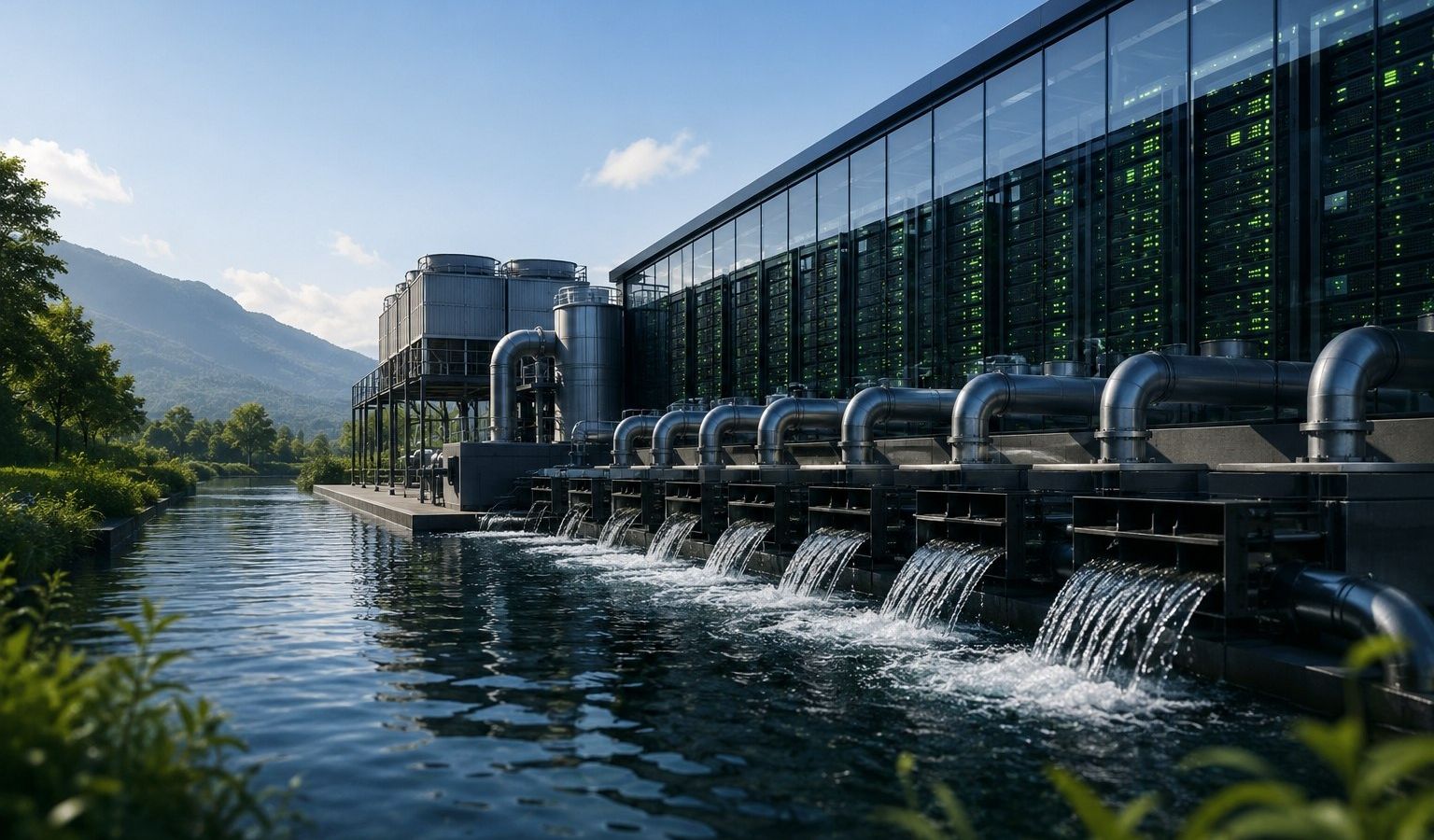
Nvidia claims to have solved the water challenge in data centers
Nvidia is making a bold statement: concerns over water use in data centers may be numbered, thanks to its new generation of AI infrastructure. This is important because data centers, powered by Nvidia chips, are under increasing scrutiny for their energy and water consumption. And Nvidia is at the center of this AI boom driving that demand.
The novelty was announced during London Climate Week. Nvidia revealed that its latest AI system can be fully cooled with a liquid hot enough to reduce the need for additional refrigeration equipment. Josh Parker, Nvidia's sustainability director, stated that "the challenge of water consumption in data centers is largely solved." This statement comes at a time when giants like Google and Amazon are defending their data center water use practices in the face of growing local opposition.
The model that could change everything
Nvidia is suggesting its next-generation AI systems could revolutionize the way data centers are cooled. The secret is in a coolant, similar to automotive antifreeze, that can operate at 113 degrees Fahrenheit. This means data centers can rely less on energy- and water-intensive cooling equipment, or even eliminate them entirely. Steve Solomon, Microsoft's vice president of data center engineering, commented that this technology could negate the need for mechanical chillers in most climates, even in hot places like Arizona.
But even if Nvidia's technology drastically reduces water use, it doesn't mean all concerns will disappear. Mass adoption will take years, and many data centers will continue to use older cooling technologies. Furthermore, Nvidia hasn't discussed the costs of its systems, and the speed of adoption may depend on the economics of facilities designed for fully liquid-cooled AI infrastructure.
The broader impact of Nvidia's technology
Water use in data centers is just one part of a larger debate. The electricity generation needed to operate AI infrastructure can also require large amounts of water, depending on the energy source. Nvidia's technology could make each unit of AI computing much more efficient, but the company makes clear these gains are intended to support further growth. Parker wrote in a blog post that "AI workloads aren't getting any lighter." Without efficiency improvements, the energy required to operate AI would continue to rise alongside demand.
Efficiency can reduce water and energy use per AI system, but it can also accelerate the expansion of AI infrastructure and increase the industry's overall impact. It's a delicate balance between innovation and sustainability, and Nvidia is betting its new technology can help find that balance.
Comments (0)
Comments are moderated and if they violate our Terms and Conditions of use, the comment will be deleted. Persistence in violation will result in a ban of your account.