



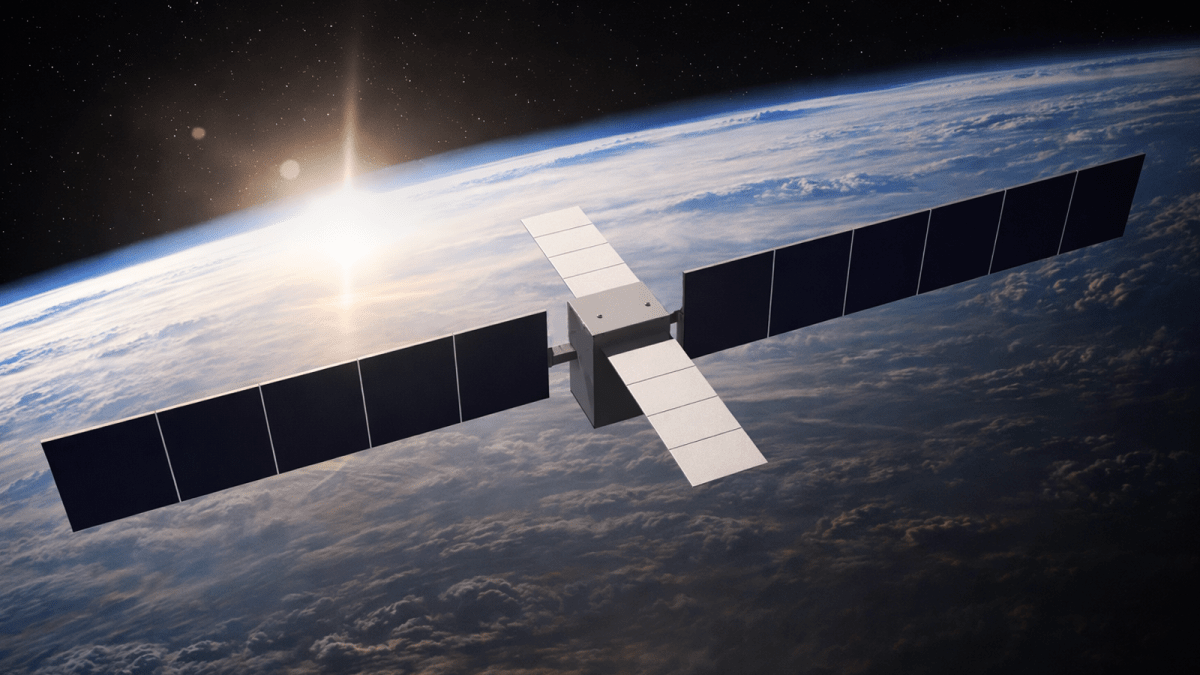
E-scooter founder raises $5 million to create space data centers
Imagine this: an e-scooter founder, with zero space experience, manages to raise $5 million to build data centers in space. It just goes to show how much the space market is changing, especially with SpaceX's influence. The company Orbital, which emerged in May from a16z's Speedrun accelerator program, is the newest promise to perform inference in space. Of course, this will only happen once SpaceX's Starship is flying regularly.
Among Orbital's investors are names like Basis Set, Human Element, and Wayfinder. Founder and CEO Euwyn Poon is no stranger to startups. He founded the e-scooter company Spin in 2017, sold it to Ford a year later, and is now eyeing the stars. According to Andrew Chen, a partner at a16z, Poon went through several ideas before deciding to invest in space data centers. The logic is simple: the demand for AI computing is insatiable, and on Earth, the process is slow. So why not go to space, where the sun is abundant and environmental reviews are limited?
The big challenge, however, is the brutal cost of launching things into orbit. Orbital, like many competitors, is betting that SpaceX will solve this issue with Starship. "We will reach full scale when Starship is online," Poon explains. The price of the Falcon 9, currently the most advanced rocket, makes it economically unviable for now.
For now, Poon and his team, consisting of about a dozen people in Los Angeles with experience at Amazon LEO, SpaceX, and Northrop Grumman, are working on a demonstration flight. They plan to test an Nvidia Blackwell chip on a partner satellite to verify Orbital's radiation shielding and thermal management technology. In 2028, the company hopes to launch its first data-processing spacecraft with Nvidia Space-1 Vera Rubin-class GPUs. The idea is to start doing inference work piecemeal, generating revenue with each launched satellite.
Orbital wants to launch 10,000 satellites providing one gigawatt of distributed computing power, with each satellite offering 100 kW of power. By comparison, Elon Musk said SpaceX's AI satellites should produce up to 150 kW, while Starcloud expects to have larger spacecraft with 200 kW to run chips.
Some companies, like Cowboy Space Company, aren't willing to wait for Starship and have decided to build their own rockets. Jeff Bezos' Blue Origin has also announced plans to launch data centers in space with its New Glenn launch vehicle. Poon is confident that AI demand is so broad it will allow many companies to succeed. "There are so many paths for companies in our sector to take," he told TechCrunch, highlighting the various options that include different AI workloads, designs, and concepts of what a space data center is.
Poon's experience in scaling a company that deployed 250,000 scooters in 100 cities shows he can manage the complex task of building an aerospace company. In the long run, a project like this could take a decade and $5 billion or more, but Chen said venture capital firms are more comfortable with such timelines. "This would have seemed crazy 10 years ago when we were all building mobile apps," he said. "Starting this in 2026 allows you to tap into all the energy and excitement happening in capital markets."
Poon arrived at the space data center business through a winding path. After leaving Ford, he bought an Nvidia A100 out of curiosity, placing it in a Santa Clara data center and serving open-weight models. That experience convinced him of the value of delivering computing in the AI era. Now, he just needs to put a few thousand GPUs in space.
Comments (0)
Comments are moderated and if they violate our Terms and Conditions of use, the comment will be deleted. Persistence in violation will result in a ban of your account.