



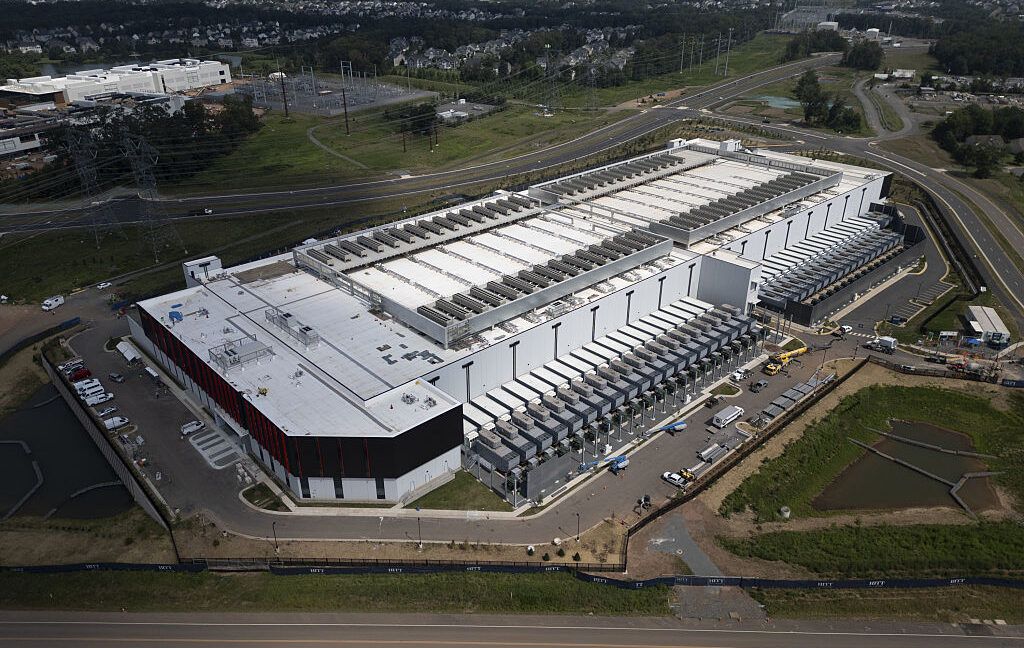
Data Centers and the Water Challenge: How Technology is Responding
Water, this essential resource, is at the center of one of the biggest discussions involving data centers today. With growing demand for efficient cooling, water use by these tech giants is under scrutiny. A clear example of this is SpaceX, which recently highlighted in its initial public offering that water-related issues, like scarcity and regulations, could limit data center development. And they are not alone. Water concerns are becoming one of the most controversial topics in the data center sector.
The main function of water in data centers is to cool server racks, which generate a colossal amount of heat. A widely used technique, called evaporative cooling, uses fresh water to absorb this heat, which is then evaporated in cooling towers. While this method can save money and reduce emissions by lowering the need for pump power, it can also result in significant water consumption. To give you an idea, Google's facility in Council Bluffs, Iowa, consumed over 1 billion gallons of water in 2024. And if hyperscale data centers continue to rely on this method, consumption could reach 33 billion gallons by 2030.
Companies like Microsoft, OpenAI, and Oracle are moving away from evaporative cooling, seeking solutions that conserve more water. This includes expansions in water-scarce regions like Texas. Google, on the other hand, is taking a different approach. The company announced water-related commitments in the communities where it has data centers, including investments in local water projects and expanded use of recycled water. Additionally, it promised to use a "data-driven framework" to decide which data center designs work best with local watersheds.
Ben Townsend, Google's global head of infrastructure and sustainability, emphasizes that data center design is more complex than simply abandoning one type of cooling. He points out that the company has been conducting detailed hydrological assessments of its sites for four years to determine best cooling practices. In some regions, where water is abundant, evaporative cooling may still be the most sustainable option. This aligns with research indicating that if all data centers in the US adopted some form of evaporative cooling during peak demand, it could free up 10 to 30 gigawatts of power.
However, completely avoiding evaporative cooling can increase carbon emissions, especially if data centers rely on dirty energy to keep facilities cool. The issue is complex, and even with efforts to reduce water use, tech companies still face significant challenges. Microsoft, for example, is moving away from evaporative cooling, but its internal projections indicate that water use could skyrocket.
Public pressure and regulation are crucial to push companies to develop smarter designs that use less water and energy. Priscilla Johnson, an independent consultant and former water strategy director at Microsoft, believes the industry needs to be challenged to simplify and innovate. After all, smart water management isn't just a sustainability issue, but also a matter of business survival.
Comments (0)
Comments are moderated and if they violate our Terms and Conditions of use, the comment will be deleted. Persistence in violation will result in a ban of your account.