



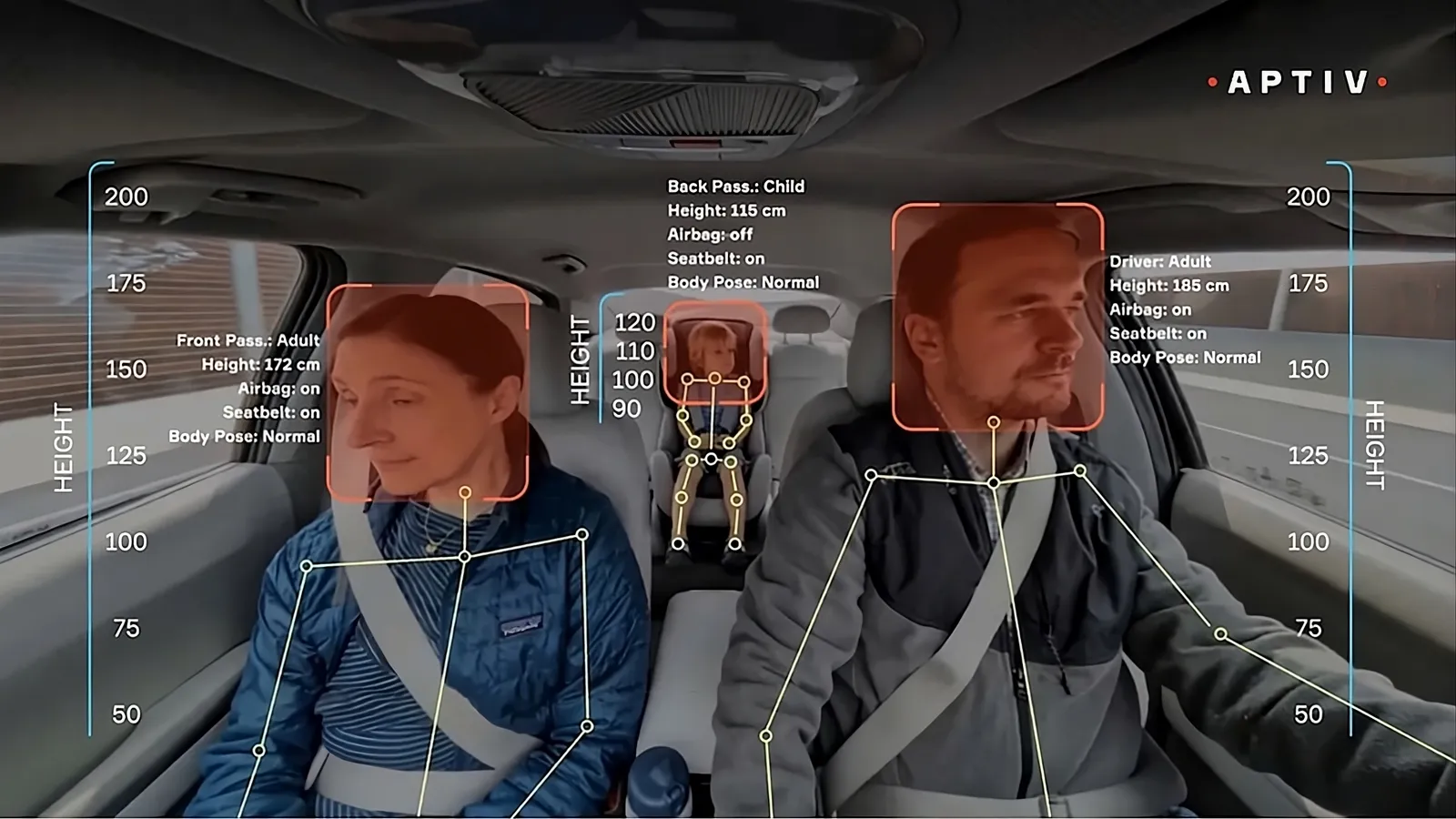
The revolution in the automotive world may come from something as small as a camera. Yes, an AI camera that promises to make your next car safer and cheaper. And we're not talking about just any gadget, but a system that can replace a series of traditional sensors in the vehicle. Aptiv, a heavyweight supplier in the automotive sector, is behind this innovation. They developed what they call the first camera-only occupant detection system.
Vehicle safety legislation, such as FMVSS 208, already requires cars to detect seat occupancy to adjust airbag deployment, for example. And with the expectation of new laws to prevent children from being left in hot cars, rear seat occupant detection is also on the radar. Aptiv, with its two decades of experience in detection systems, wondered: what if a good camera, monitored by artificial intelligence, could do all this? The answer is promising. Besides significantly cutting costs on a new car's bill of materials, it simplifies assembly and even opens up new design possibilities.
Let's break it down. Occupancy sensors for the front passenger seat aren't cheap. They typically involve load cells on seat tracks, pressure mats, weight-sensitive bladders, or integrated seat structures that measure load. And all these sensors need power, grounding, and communication wiring. Meanwhile, rear occupancy detection can be as simple as detecting seatbelt buckles or pressure sensors that don't weigh occupants. Not having to calibrate and validate these systems saves even more. Aptiv claims it can reduce the bill of materials cost by 40%, with total savings between 80 and 200 dollars per vehicle.
And it's not just about savings. With these traditional sensors out of the way, designers have more freedom to introduce new seat architectures, thinner seats, lightweight structures, folding and removable seats. Massage systems also become easier to calibrate.
Aptiv's Advanced Occupancy Classification system uses a wide-angle camera mounted at the base of the rearview mirror, positioned to clearly see front and rear seats. These cameras are already being added to new vehicles in anticipation of expected "Hot Cars" legislation. They detect occupants, recognize faces, and determine posture, even identifying issues like feet on the dashboard. And they are great at spotting child seats.
The camera's biggest challenge is determining the mass of the front seat occupant, since a 5'2" adult woman and a 12-year-old child can have similar visual dimensions, especially if wearing a bulky winter coat. But that's where AI steps in, discriminating based on facial cues and clothing assessments. Aptiv guarantees its system meets all FMVSS 208 performance standards.
The system will be showcased in early June 2026 at InCabin USA, ready for deployment, but with no contracts announced yet. The savings couldn't come at a better time!
Comments (0)
Comments are moderated and if they violate our Terms and Conditions of use, the comment will be deleted. Persistence in violation will result in a ban of your account.