


Anthropic transformed Claude into a teammate
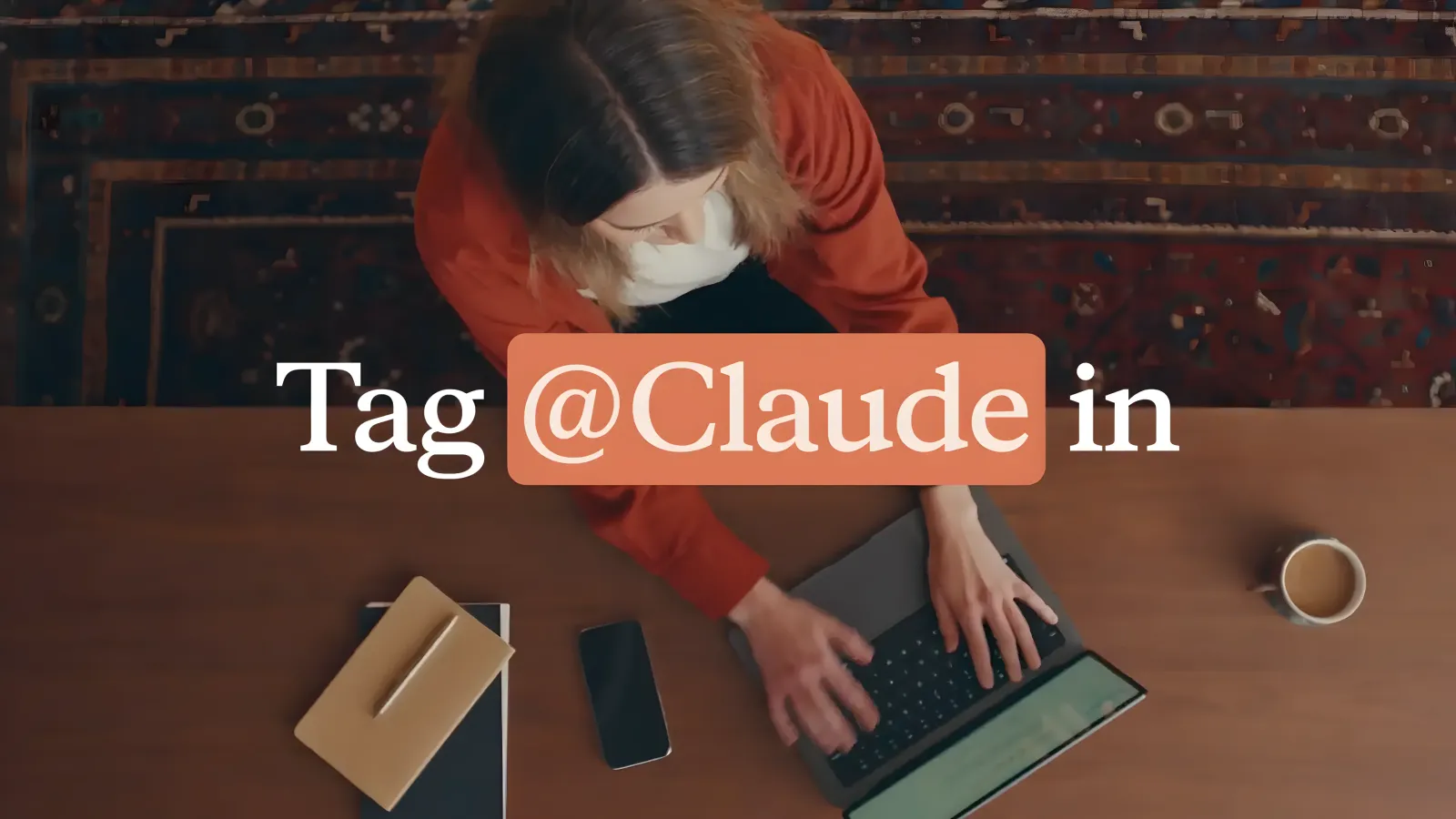
Anthropic doesn't stop releasing new features for Claude. After investing heavily in models, Claude Code, enterprise integrations, and agent-focused features, the company has just introduced Claude Tag, a novelty that takes the idea of an AI assistant to another level.
The proposal is simple to understand, but quite ambitious: instead of chatting with a chatbot when you need help, now Claude becomes part of the team. Literally.
Claude Tag initially arrives in beta for Claude Team and Enterprise customers within Slack, but Anthropic has already stated it intends to expand the functionality to other environments in the future.
During the last few months we saw practically all major AI companies race to turn their models into agents. The difference is that Anthropic seems to be focused on something beyond task automation. It wants Claude to follow the team's work continuously.
A change that might seem small at first glance.
But it isn't.
Claude stops being a tool and starts participating in the work
Today, when you use ChatGPT, Gemini, or Claude itself, you typically start a conversation from scratch. Even when memory exists, there is still a clear moment when you need to call the AI to start a task.
With Claude Tag, the logic shifts.
According to Anthropic, there is a single instance of Claude inside each Slack channel. This means it follows the conversations, understands the accumulated context of that environment, and allows any team member to continue a task exactly from where someone else left off.
The company itself describes the system as a Claude that continuously learns about the work done in that channel.
The longer it follows the discussions, the more context it accumulates.
And the fewer explanations users need to provide.
This is perhaps one of the biggest bottlenecks of current assistants. A good portion of the time spent with AI is still related to contextualization. Explaining the project, explaining the history, explaining the demand, and only then asking for help.
Anthropic wants to eliminate this step.
When the AI begins to take initiative
The most interesting feature of Claude Tag is perhaps the so-called "ambient behavior."
By activating this mode, Claude stops acting only when it is mentioned. It starts to observe what happens in the channel and can take initiative on its own. According to the company, it can pick up on topics that were forgotten, highlight relevant information coming from other authorized channels, and flag important updates to the team.
It's a significant change.
Until now, most AI agents functioned like an employee waiting to receive orders.
Claude Tag tries to act more like someone who follows the project's progress and reminds the team of what is falling behind.
Now, when it receives a request, it can split the task into steps, use the tools it has access to, and reply in the thread itself with the produced results.
According to Anthropic, this includes activities such as data analysis, incident resolution, and even creating or merging pull requests.
The detail is that it no longer depends solely on an isolated conversation. In practice, we are seeing a transition from the chatbot concept to something closer to a digital collaborator. It follows the environment. Learns from it. And keeps working in it.
The most impressive piece of data came from Anthropic itself
Among all the information disclosed, one caught a lot of attention.
Anthropic claims that Claude Tag has already become one of the main ways of working within the company itself. According to the company, about 65% of the code produced by the product team already comes from the internal version of this technology.
Of course, this number comes from Anthropic itself and should be interpreted within this context.
But it helps understand an increasingly clear trend in the market.
AI companies are no longer competing just to build smarter models.
The dispute now happens in the workflow.
Whoever manages to integrate best into teams' daily routines will have a huge advantage.
And looking at Anthropic's latest releases, it is evident that this is exactly the path it chose to follow.
The question that remains is simple: when agents start participating in conversations, tracking projects, and taking initiatives on their own, will we still call them assistants? Or will we be facing a new category of digital coworker?
Comments (0)
Comments are moderated and if they violate our Terms and Conditions of use, the comment will be deleted. Persistence in violation will result in a ban of your account.