



The Gulf AI Race Faces an Obstacle: Submarine Cables
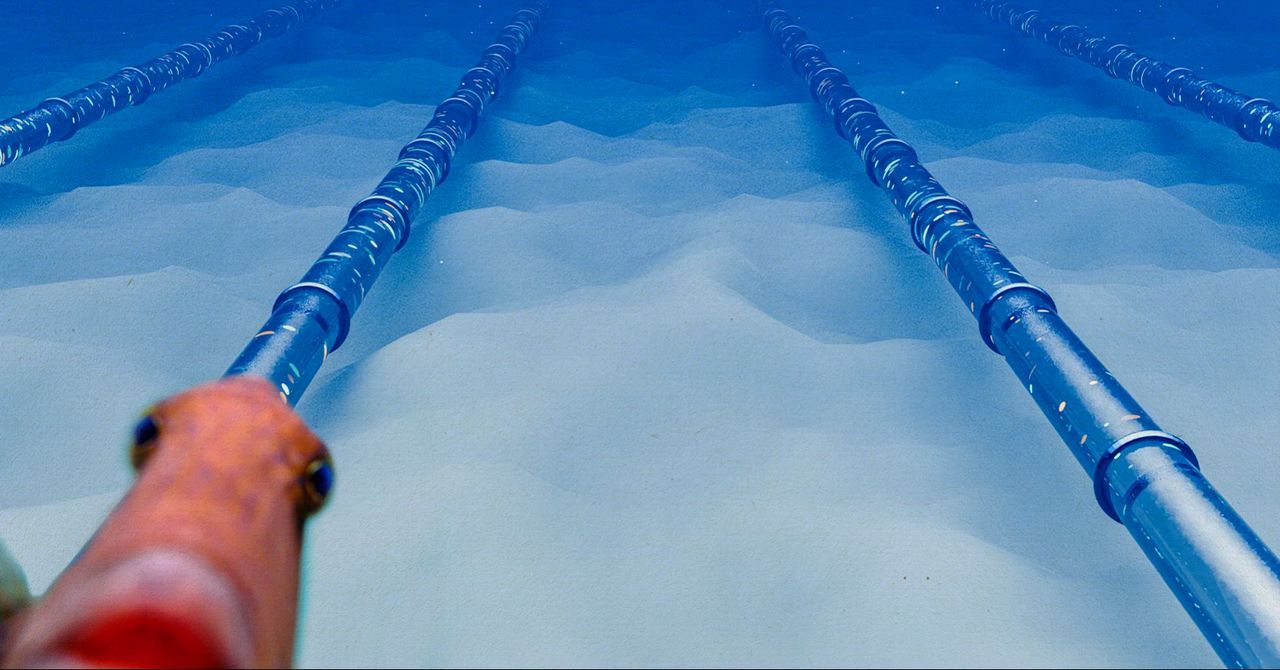
The frenetic race for artificial intelligence in the Gulf hits an unexpected obstacle: fragile submarine cables. These countries' ambition to lead the AI sector depends on something surprisingly delicate: a network of submarine cables running through some of the most unstable waters on the planet. Saudi Arabia and the United Arab Emirates have invested billions in AI infrastructure, attracting industry giants and positioning themselves as future exporters of computing capacity. But as the region transitions from an oil-based economy to one driven by AI, the infrastructure carrying this data is becoming a strategic vulnerability.
Submarine cables have always been the engines of the global internet, and now they are becoming geopolitical assets. Following rising tensions between the US, Israel, and Iran earlier this year, experts warned that regional conflicts could threaten critical cable infrastructure in the Gulf. In May, reports emerged that Iran was considering taking control of all seven submarine cables passing through the Strait of Hormuz. To give you an idea, these cables carry about 95% of all international data traffic.
For the Gulf, the problem is concentration: much of the region's connectivity with Europe and the US still relies on a few routes through the Red Sea and the Strait of Hormuz. The issue is that a damaged cable today can do much more than just slow down internet speeds. It can undermine the entire emerging AI business model in the Gulf.
Gulf countries are trying to transform their energy wealth into AI infrastructure, exporting computing and cloud capacity just as they used to export hydrocarbons. For Middle Eastern economies preparing to become major exporters of computing power, the importance and dependence on these cables are growing, especially as tech companies setting up in the region demand greater resilience than ever before.
AI infrastructure, unlike traditional internet traffic, depends on continuous and massive data flows between giant data centers, cloud providers, and enterprise clients. Even minor disruptions can cause significant operational and financial consequences, making resilient fiber infrastructure a business necessity, not a luxury.
"What we are seeing now is tech giants and regional operators seeking diversification because their needs are no longer limited to bandwidth. They need multiple independent paths, predictable latency, and survivability in times of geopolitical stress," says Imad Atwi, a partner at consultancy Strategy& Middle East.
AI Is Forcing the Gulf to Rethink Connectivity
Pressure is mounting. Recently, the possibility of cables linking Europe to the Middle East and Asia being cut in the Red Sea raised concerns about internet connectivity across the Gulf. This was before the large-scale rollout of AI and the launch of data centers. Now, tech giants are demanding the same resilience standards in the Middle East that they already rely on for transatlantic and transpacific routes.
For years, proposed routes—both land and sea—in the Middle East struggled to move forward due to regulatory barriers, political instability, and regional conflicts. Now, many of these same corridors are being reconsidered as critical digital infrastructure.
Atwi describes a tiered strategy emerging in the Gulf. The first tier involves landing stations connected through terrestrial fiber corridors spanning Saudi Arabia, the UAE, and Oman, extending toward Europe and Asia via Jordan and the Levant. A second tier would introduce new submarine and terrestrial systems, bypassing critical points in Egypt and the Bab el-Mandeb. A third tier would create northern land corridors passing through Iraq, Syria, and Turkey.
The New Strategic Internet Corridors
Some of the region's most ambitious projects involve countries previously seen primarily through the lens of conflict. Terrestrial systems, such as the one proposed via Syria, can support up to 144 fiber pairs compared to the typical 24 in current submarine cables, meaning the capacity potential is massive. The downside is that they are above ground, making them much more vulnerable to physical disruptions.
It is not an abstract risk. The JADI route, named after Jeddah, Amman, Damascus, and Istanbul, was launched just before Syria entered civil war in 2011. The connection was cut during the conflict and never fully restored. Today, with Syria in a period of relative stability, Saudi Arabia's state telecom company, Stc Group, is investing $800 million to revive this link, now called SilkLink. A consortium of Iraqi and Emirati companies is attempting something similar in Iraq, building the $700 million WorldLink cable, which will travel submerged in the Strait of Hormuz from the UAE to Iraq and then transit to land cables up to Turkey.
"Projects like WorldLink and SilkLink are strategically important because they create additional East-West connectivity corridors that reduce reliance on maritime chokepoints," says Carl Sykes of maritime risk consultancy Neptune P2P Group.
If these projects advance, the Gulf's dependence on two narrow maritime corridors will be eased. But they are not yet complete, and neither Syria nor Iraq has proven immune to the fragile Middle Eastern geopolitical order. Satellite connectivity is also attracting growing interest as part of broader resilience planning. They have advantages—satellites cannot be easily sabotaged or accidentally damaged—but they also cannot carry as much data as sea or land cables and suffer from higher latency.
"Satellite services continue to play an important role for redundancy and continuity planning, but modern economies still rely on resilient fiber infrastructure," adds Sykes.
In the short term, there is simply no way to replace decades of submarine cable infrastructure investment overnight. But the Gulf has already realized that moving data is not just an infrastructure issue; it is a strategic asset and also a vulnerability. The region is among the first globally to face the scale of this change and start actively redesigning its infrastructure around it. How it responds to this could shape how other AI-driven economies approach connectivity resilience in the coming years.
Comments (0)
Comments are moderated and if they violate our Terms and Conditions of use, the comment will be deleted. Persistence in violation will result in a ban of your account.