



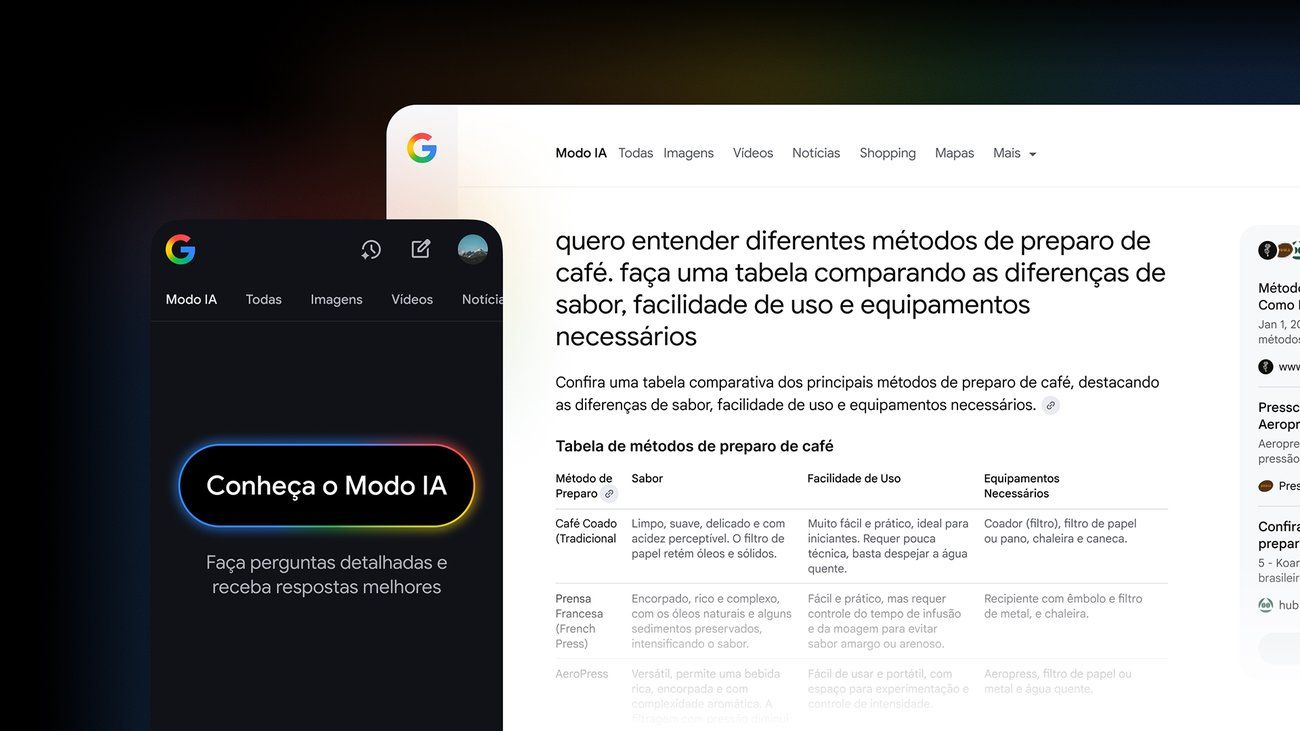
Google's AI Mode is transforming the web
When was the last time you searched for something and didn't click on any links? This scene, which seems like a convenience, is becoming a pillar of a larger transformation on the web. The New York Times highlighted that Google, after the scare with ChatGPT, reinforced its search engine with Gemini and its AI Mode. What does this mean? The answers now keep the user within Google, without needing to visit other sites.
The numbers speak for themselves. Studies show that users spend one to nine minutes longer in AI Mode than in traditional searches. Queries are longer, and in 75% of sessions, users do not leave the Google environment. Google claims that clicks to other sites remain stable, but many publishers disagree. For them, the system has already changed.
Google Zero: the critical point for publishers
AI Mode transforms a search into a conversation. Queries are more detailed, and the AI-generated answers often eliminate the need to click on external links. Google has been enhancing this mechanism with snippets and quick answers, but AI has made everything more efficient and engaging. Analysts call this "Google Zero," where traffic to other sites approaches zero. For many newsrooms, this is no longer a distant theory.
The data is alarming. Wikipedia saw an 8% drop in human visitors while bot traffic, which collects content to train AI models, is growing. According to Cloudflare, more than half of current web traffic is non-human. Between June 2025 and April 2026, human traffic to finance, media, and e-commerce sites fell by 40%. This indicates that, while the central answer becomes more efficient, the sites that produce the original information receive less attention.
Consequences for the open web
Tim Berners-Lee warned that AI is accelerating the isolation of users in closed ecosystems, away from the open web that gave rise to the internet. This is not just a philosophical issue. It directly affects business models, jobs, and coverage. The case of Vox Media is a clear example. The company sold half of its assets to James Murdoch, influenced by the drop in traffic coming from Google.
For those seeking a recipe, news, or quick explanation, the new system seems like an improvement: fewer clicks, fewer tabs, immediate response. But, if everything goes through a single hub, other sites may end up without visitors. This concentration of traffic in a single point raises questions about the future of the open web and access to diverse information.
The centralization dilemma
We are moving towards a scenario where centralization may stifle the diversity of sources and opinions. The question remains: how to balance the efficiency of AI with the need to keep the web open and accessible to all? This is a question that cannot be ignored if we want to preserve the wealth of information available on the internet.
Comments (0)
Comments are moderated and if they violate our Terms and Conditions of use, the comment will be deleted. Persistence in violation will result in a ban of your account.