



Children's Hospital Revolutionizes Cardiac Care with NVIDIA Open Source AI
In the world of medicine, every heart is unique, especially when we talk about children with congenital heart diseases. The Children's Hospital of Philadelphia (CHOP) is at the forefront of this reality, using NVIDIA's open source artificial intelligence tools to create cardiac models in seconds. This is not just a technological advancement; it is a new way to provide safer and more precise care for children born with heart defects.
The complexity of congenital heart conditions is a challenge. About 1% of births present some type of heart defect, and each case is different. Imagine a generic medical device being used on a heart that needs something custom-made. This is where the work of Dr. Matthew Jolley and his team at CHOP comes in. They use MONAI, an open source medical imaging framework co-founded by NVIDIA, to transform images from CT scans, MRIs, and 3D ultrasounds into accurate anatomical models. What used to take hours is now done in seconds.
The Impact of Cardiac Modeling
The adoption of this technology is not limited to CHOP. More than 20 children's hospitals in the United States have already implemented cardiac modeling programs. At Boston Children's Hospital, for example, more than half of the cardiac surgeries already have this support. This means that hundreds of cases are treated with an accuracy previously unimaginable.
The modeling process started as research but quickly became a standard of care. An emblematic case was that of a child who had already undergone two unsuccessful attempts at cardiac repair. With the 3D model, the surgeons were able to clearly visualize the problem and successfully perform the repair on the first attempt. Cardiac modeling has transitioned from a research curiosity to an essential component of treatment.
Near Real-Time Simulations
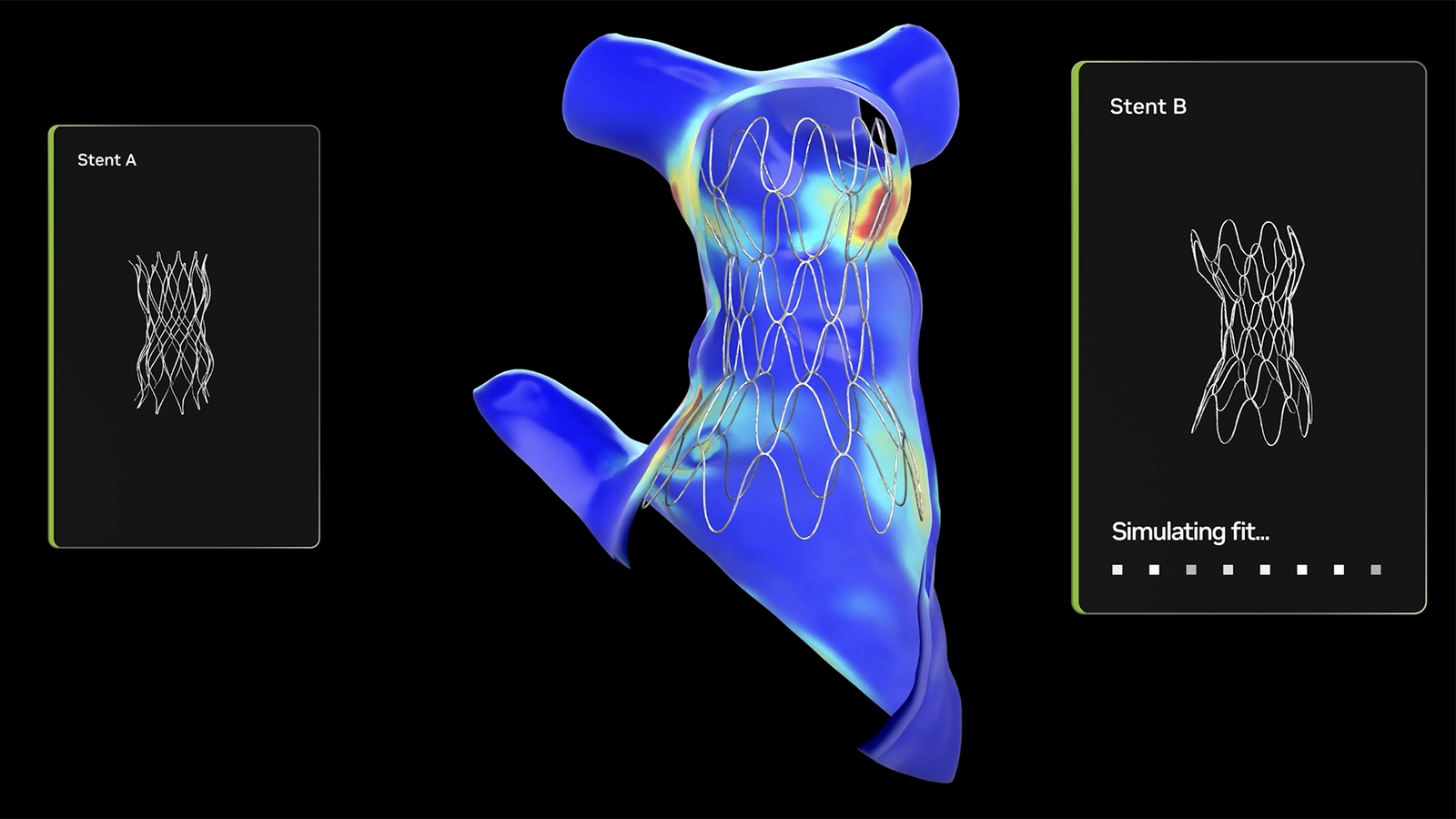
But the innovation doesn't stop at visualization. Jolley's team is working with Newton, an open source physics engine based on the NVIDIA Warp framework, to simulate how medical devices interact with a child's heart even before surgery begins. This allows doctors to understand how a device will behave inside the body, reducing simulation time from hours to nearly real-time.
In practice, this means that a clinician can compare different devices and make informed decisions on the same day. CHOP has already begun implementing these functionalities for devices that close heart holes and expects to expand to transcatheter valve simulations. The open source architecture of Warp and Newton is being integrated into SlicerHeart, aiming to bring real-time simulations to clinical workflows.
The Power of Open Source in Medicine
The use of open source technologies is a response to the lack of traditional investment in medical devices for rare and diverse conditions like congenital heart diseases. Open source allows collaboration and progress without traditional economic barriers. Tools like SlicerHeart are free and open for development, enabling institutions like Stanford and Boston Children's Hospital to contribute new tools.
NVIDIA's collaboration on open platforms like MONAI for AI in medical imaging and Newton for physical simulation provides medical teams with access to industrial-scale infrastructure. This means that a lab in a children's hospital can leverage tools that would otherwise require an engineering team from a company to develop and maintain.
What we are witnessing is more than just a simple application of technology. It is a transformation in how we care for the most vulnerable children, using the power of AI and open source collaboration to provide treatments that were once impossible. And this is just the beginning.
Comments (0)
Comments are moderated and if they violate our Terms and Conditions of use, the comment will be deleted. Persistence in violation will result in a ban of your account.