



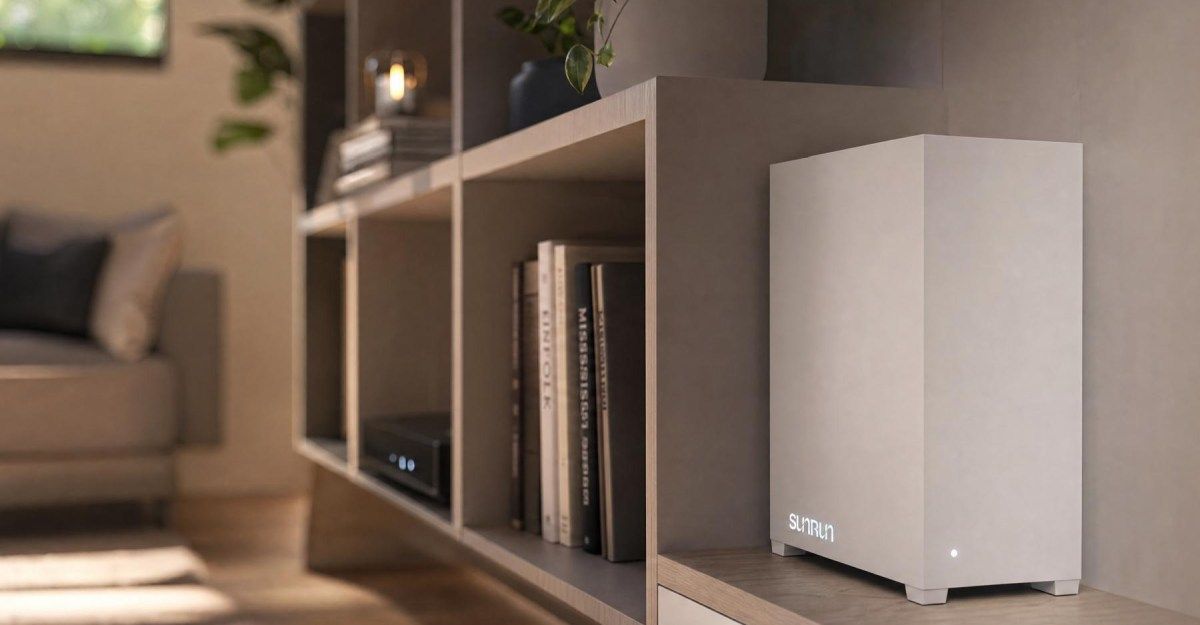
Would you host part of an AI data center in your home?
Transforming your home into a piece of an artificial intelligence data center may sound futuristic, but it is exactly what Sunrun, a solar energy and home storage company, is proposing. They are launching a pilot program that aims to install small computing nodes in the homes of customers who already have the company's solar energy systems and batteries. In return, participants will receive financial compensation. This is an innovative solution to the challenge of space and resources for AI computing infrastructure, especially as new data centers face resistance for environmental reasons.
The proposal is straightforward: instead of concentrating all computing capacity in a single location, Sunrun wants to distribute these small nodes across the country. This not only alleviates the pressure on building large data centers but also transforms the existing infrastructure into a distributed computing network. And, of course, customers who agree to host these nodes in their homes will receive a financial return for their participation. Sunrun has already successfully tested this idea in a previous concept, but there are still questions about how it will work on a larger scale.
Resistance to traditional data centers
The current landscape does not favor the construction of new data centers. A recent survey showed that more than 70% of Americans are against building new centers in their areas, mainly due to concerns about pollution, noise, and excessive use of water and electricity. In this context, Sunrun's proposal emerges as a creative and potentially less impactful solution. By distributing the computing nodes, the company not only avoids the problems associated with large data centers but also leverages the renewable energy infrastructure already installed in customers' homes.
Sunrun, which has 1.1 million customers, is inviting those interested to sign up for a waiting list for the pilot program. The expectation is that the pilot will be completed in the coming months, allowing the company to assess the results before expanding the program. If successful, this model could redefine how we think about AI computing infrastructure, decentralizing computational power and integrating it more deeply into our daily lives.
A new vision for AI computing
The idea of transforming homes into small computing hubs is a bold vision that could change how AI infrastructure is developed. With the success of the pilot, Sunrun could pave the way for other companies to follow suit, especially in a world increasingly concerned with sustainability and energy efficiency. Furthermore, this distributed approach could offer a viable solution to the growing demand for computational power without the negative impacts associated with large data centers.
Ultimately, Sunrun's proposal is not just about AI computing, but about how we can integrate advanced technology into our lives in a sustainable and beneficial way for all involved. Whether this idea will take off or not remains uncertain, but it certainly represents an interesting step in the evolution of technological infrastructure. And you, would you be willing to make space in your home for a computing node?
Comments (0)
Comments are moderated and if they violate our Terms and Conditions of use, the comment will be deleted. Persistence in violation will result in a ban of your account.