



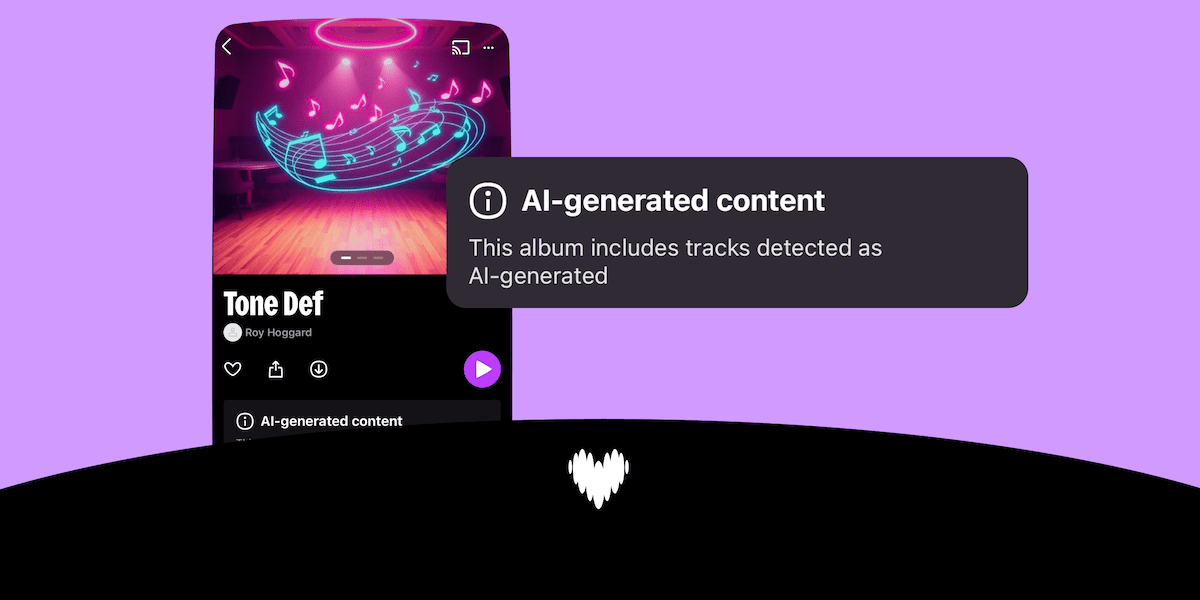
Deezer and the Tsunami of AI-Created Music
Deezer has revealed that over 50% of daily uploads are AI-generated. AI-generated music is taking over Deezer. The streaming platform announced that currently, more than half of daily uploads are creations of AI. This is no small feat. In June 2026, the monthly average reached 90,000 tracks per day. The growth is so rapid that streaming platforms are questioning how much of this music they want in their catalogs. And there is no consensus. Bandcamp, for example, has banned these tracks, while Tidal has cut monetization. Apple Music has adopted a voluntary system for identifying AI-created music, and Spotify has created its own policy regarding the use of AI in music production.
Deezer's Strategy Against Fraud
Deezer has decided to remove AI-generated tracks that have not been listened to in the last six months or that are involved in fraud to increase revenues. Alexis Lanternier, CEO of Deezer, stated that the company is at the forefront of combating fraud and reducing the dilution of payments related to AI music. Half of daily uploads are now AI-generated tracks, and Deezer is taking additional measures to protect the rights of artists and songwriters while maintaining a focus on the music that fans truly love.
Deezer began releasing statistics on uploads of AI-generated music in January 2025, when the daily volume was around 10,000 tracks, or 10% of daily uploads. This number grew to 20,000 tracks in April 2025, representing 18% of daily uploads. By September 2025, it rose to 30,000 tracks, or 28% of daily uploads, and in November 2025, it reached 50,000 daily uploads, or 34% of daily uploads. This year, the number rose again to 60,000 tracks, or 39% of daily uploads, in January 2026. In April 2026, the figure reached 75,000 tracks, or 44% of daily uploads.
Detection Technology and Partnerships
Since last year, Deezer has been labeling AI music on its platform and claims that its detection technology can identify tracks generated with models from AI music startups like Suno and Udio, which are involved in copyright processes. Earlier this year, Deezer made its detection technology available to other platforms, but it is still unclear if any of the major platforms are using the tool. Last month, Deezer also launched a tool that can scan playlists from Apple Music and Spotify for AI-generated tracks.
What is clear is that AI-generated music is not just a passing trend. It is a force reshaping the music landscape, and streaming platforms need to decide how to deal with this new reality. The question now is: how to balance innovation and authenticity in a world where human creativity and artificial intelligence are increasingly intertwined?
Comments (0)
Comments are moderated and if they violate our Terms and Conditions of use, the comment will be deleted. Persistence in violation will result in a ban of your account.