



Google and SpaceX: The Space Race for Orbital Data Centers
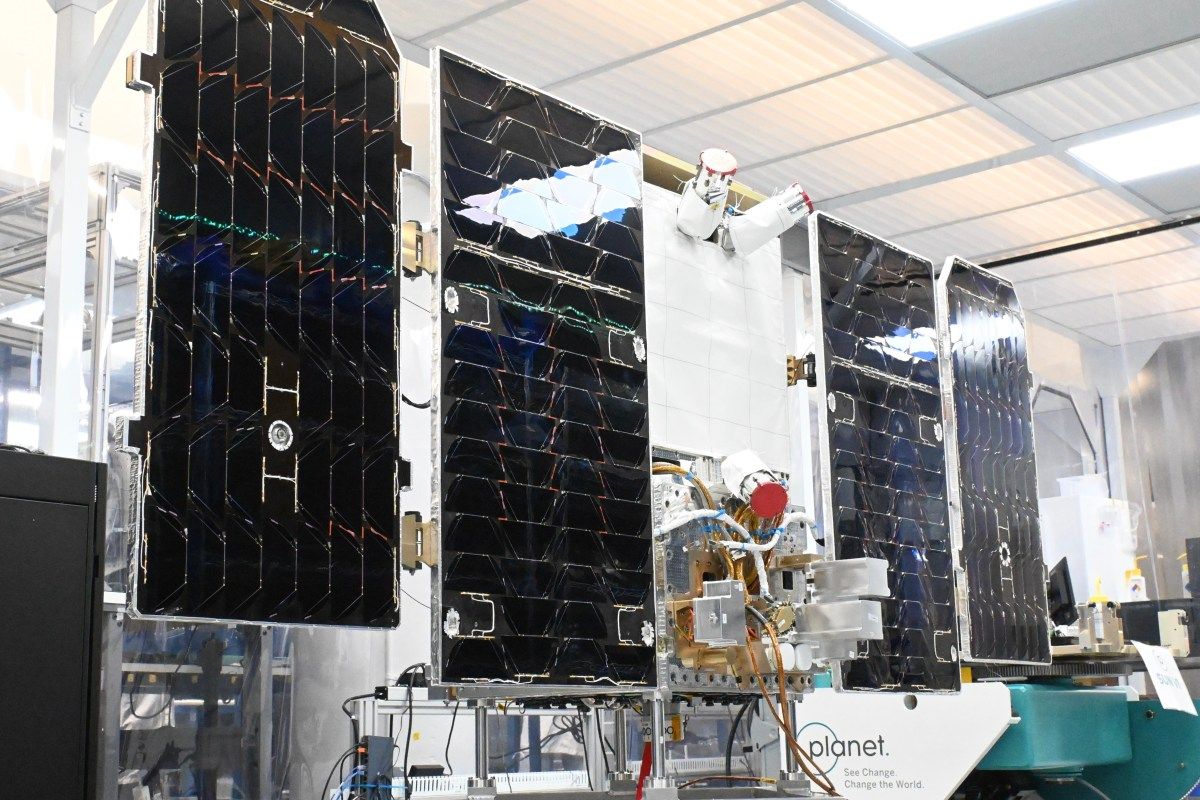
Google has taken a bold step into space with the launch of its orbital computing satellite prototype aboard a SpaceX rocket. This move marks the first time the tech giant has sent one of its advanced chips beyond Earth's atmosphere. Built by Planet Labs, the satellite's mission is to test whether Google's Tensor Processing Unit (TPU), a competitor to Nvidia's GPUs, can operate efficiently in space. The challenge is to provide one kilowatt of continuous power, cool the chip, and run a series of models to check for potential failures.
Travis Beals, a Google executive leading the Suncatcher Project, emphasizes that while ground tests have been conducted, nothing compares to the reality of operating in space. Once operational, the satellite will activate its TPU in bursts of 15 minutes to avoid overloading its power and thermal management systems. This initial satellite is based on a standard platform from Planet Labs, but future versions, more specialized for advanced computing, are expected to fly next year. These future satellites will attempt to collaborate through a laser communication link.
Google's Long-Term Strategy
The Suncatcher Project is not just another AI payload aboard SpaceX's rocket, which carries over a hundred different missions. What sets Google's initiative apart is its long-term vision. Beals describes the project as a long-term "moonshot," focused on building the space infrastructure and AI workloads that will exist in the future. The company envisions a network of 81 satellites flying in close formation, processing data in parallel.
One of the central challenges is the latency and bandwidth between the TPUs, which are crucial for running multi-rack workloads. Google is looking beyond current needs, designing for where workloads will be in five years. However, one of the major obstacles is that the rockets needed to scale orbital data centers economically do not yet exist.
SpaceX's Role and the Economics of Space
Google, like many data center companies, is eyeing SpaceX to launch its spacecraft. Elon Musk's company has demonstrated a learning curve that reduces launch prices by about 20% per year since the Falcon 1 launch. The authors of Google's study believe it is reasonable to expect SpaceX to deliver launch prices close to $200 per kilogram by 2035.
To achieve this goal, the Starship, SpaceX's rocket, would need to launch 370,000 tons of payload into orbit. This would require about 1,800 launches over the next ten years, or 180 per year, assuming each mission can carry 200 metric tons. This is a significant challenge for a vehicle that has never flown more than five times in a year. Although Elon Musk has suggested that Starship could achieve an hourly flight rate by 2029, Musk's forecasts are known to be ambitious.
Challenges and Hopes for Space Computing
Despite the challenges, Google's updated research brings good news: its chips appear capable of surviving space radiation. After tests in a particle accelerator, the company found that the chip configurations offered more protection than expected, resulting in a slight increase in logic errors in the chips. However, Google remains confident that its chips can handle large inference workloads in orbit during the five-year lifespan of a satellite.
The error rate is extremely low for typical inference operations, but it has already proven problematic for mega-scale training runs, where thousands of chips operate for months. The future of space computing is still under construction, but Google and SpaceX are at the forefront of this journey, exploring new frontiers and redefining what is possible beyond Earth.
Comments (0)
Comments are moderated and if they violate our Terms and Conditions of use, the comment will be deleted. Persistence in violation will result in a ban of your account.