



Agility Robotics: Humanoid Robots on the Stock Exchange
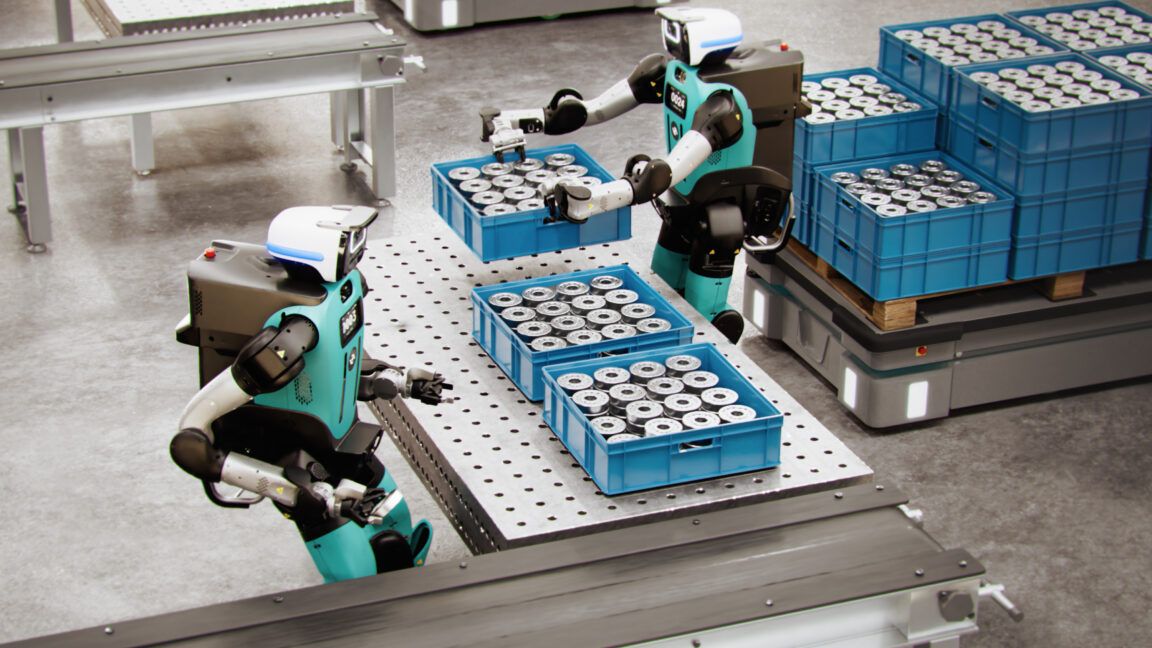
Agility Robotics, a pioneer in the development of humanoid robots, has just become the first company in the sector to be listed on Nasdaq. This debut not only puts the company in the spotlight but also highlights the potential and challenges of the humanoid robotics market. While industrial robots are already a consolidated reality in factories and warehouses, humanoids are still in the proof-of-concept phase, seeking space for broader commercialization.
Agility's Business Model
Agility Robotics, based in Salem, Oregon, is betting on a business model that involves both the sale and rental of its humanoid robots, known as Digit. The company has already begun the commercial deployment of its robots in 2024, and now, with the opening of capital, plans to further expand its operations. Co-founder Jonathan Hurst emphasized that the "robots as a service" model offers an immediate return on investment for customers, as the cost is comparable to that of human labor.
The company has stood out in the market for its ability to deploy and operate humanoid robots for various clients, including giants like GXO, Schaeffler, and Toyota. GXO, for example, has already announced the expansion of the use of Digit robots beyond its warehouse in Georgia, taking them to facilities in North Carolina and Tennessee.
Challenges and Future Perspectives
Despite the optimism, Agility acknowledges the risks associated with its business. The company has not yet achieved profitability and expects to continue facing operational losses in the near future. In 2025, Agility reported revenue of only $1.8 million, against an operational loss of $140 million. This highlights that the company is still in the early stages of building a sustainable business.
In addition to internal challenges, Agility faces stiff competition from well-funded companies like Boston Dynamics, Tesla, and others. These competitors have significant advantages in terms of brand recognition and financial and technical resources. Agility also needs to deal with safety issues, constantly changing regulations, and cyber threats.
The Path to Commercialization
The future of humanoid robots looks promising, but there is still a long way to go. Agility is heavily investing in research and development, as well as expanding its manufacturing facilities. The company recently announced plans to build a new facility in Pittsburgh, Pennsylvania, to support the deployment of Digit robots and further develop its software and artificial intelligence.
Jonathan Hurst, co-founder of Agility, believes that the potential market for humanoid robots is vast, with millions of manual tasks that could be automated. He predicts that soon, humanoid robots will be performing tasks so routinely that the novelty and excitement surrounding them will dissipate.
Although Agility is still far from achieving the dream of a general-purpose autonomous robot, the company is focused on specific and controlled tasks, away from more complex home environments. Agility's path will be a valuable case study for understanding the broader trajectory of the humanoid robotics industry.
Comments (0)
Comments are moderated and if they violate our Terms and Conditions of use, the comment will be deleted. Persistence in violation will result in a ban of your account.