


The Silent Revolution: AI in Brazilian Studies
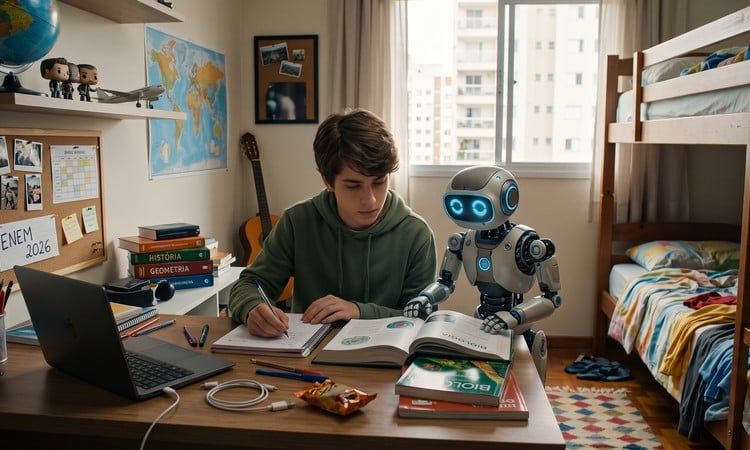
Almost 80% of Brazilian students have already incorporated artificial intelligence into their study routines. This impressive figure reveals a silent yet profound shift in how knowledge is sought and processed. The research conducted by Opera shows that 15% of students turn to AI whenever they study, while 34% start their research with these tools. But, like any revolution, this one also brings its concerns.
The reliability of the information generated by AI is a point of tension. More than half of the students, 52% to be exact, question the accuracy of the data they receive. This is not surprising, considering that AI models can make mistakes and even "hallucinate" information. Interestingly, even with this distrust, many students continue to use AI as a starting point, but not without first checking the information against other sources.
Self-Directed Use and Lack of Guidance
One of the most intriguing aspects of this research is the self-directed use of AI by students. Only 5% received any formal guidance on how to use these tools correctly and healthily. This means that most are navigating this new territory on their own. While 40% have never had any guidance, 32% rely only on informal tips from teachers.
This lack of institutional guidelines is concerning. Some schools even prohibit the use of AI, while others have clear policies. But overall, formal guidance is scarce. This raises the question: are we preparing our students to use AI critically and responsibly?
AI: Ally or Substitute for Search Engines?
The research also reveals that AI is starting to "lean" on traditional search engines as the first source of consultation. About 18.85% of students look to AI first before turning to Google. This happens because AI offers speed and a new way to understand complex subjects. However, 33.90% still prefer to start with traditional search engines.
The use of AI is viewed positively by many students. Almost half of them, 46.9%, feel relieved to have this technology, while 30.1% see it with enthusiasm. However, some have concerns about the impact of this on their future careers and personal learning. These concerns are legitimate and reflect a delicate balance between innovation and tradition.
Reliability and Responsible Use
Despite the massive use, the reliability of the information generated by AI remains a central concern. For 52% of respondents, accuracy should be prioritized over the speed of responses. This shows that students want not only quick answers but also correct and well-founded ones.
The research highlights that 6 out of 10 students always check or question the information provided by AIs. This is a positive sign that, despite their trust in technology, there is a genuine desire to maintain the quality of learning. However, there is still a significant number of students who accept answers without verification, which can be a risk to their academic formation.
In the end, artificial intelligence is already a reality in the studies of Brazilians. But, like any powerful tool, its use requires responsibility and guidance. The challenge now is to ensure that this technology is an ally in developing critical thinking and expanding knowledge. After all, the AI revolution in education is just beginning.
Comments (0)
Comments are moderated and if they violate our Terms and Conditions of use, the comment will be deleted. Persistence in violation will result in a ban of your account.