



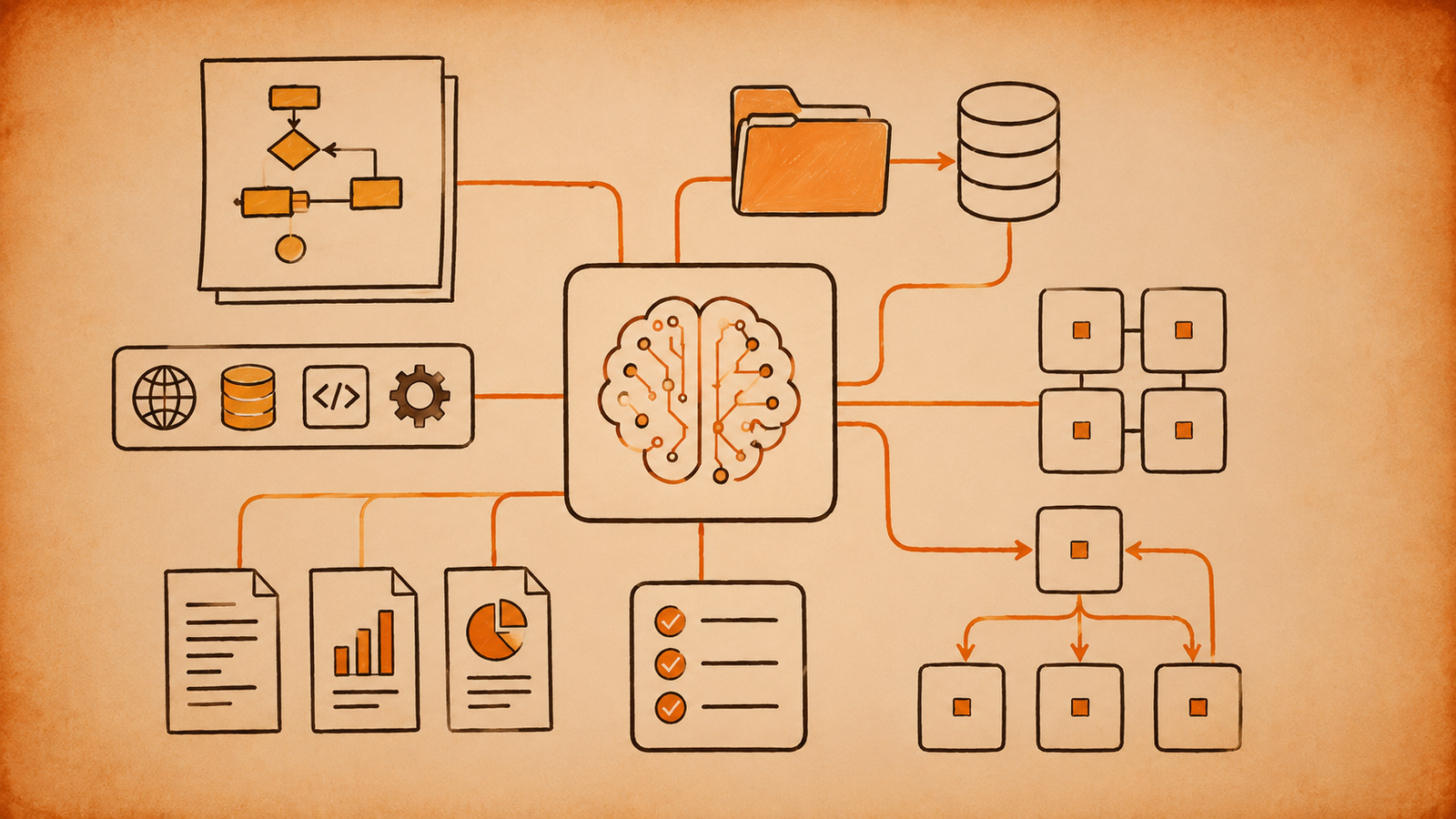
Você provavelmente já percebeu a nova moda do mercado de tecnologia. Hoje em dia tudo recebe o nome de agente. A pessoa cria uma simples automação para mover um arquivo e já chama isso de agente autônomo. Mas nós precisamos colocar os pés no chão e entender os fundamentos. A realidade é que nós estamos entrando na era da arquitetura de inteligência artificial, e misturar os conceitos vai custar muito caro para o seu projeto e para o seu bolso.
A Evolução do Prompt para a Ação
Para entender o cenário atual, precisamos voltar um pouco no tempo. Em 2022, nós tínhamos apenas assistentes virtuais baseados em texto. Você enviava um comando e recebia uma resposta, mas o modelo não tinha conexão com o mundo exterior. Ele não conseguia executar ações de forma autônoma dentro da sua máquina.
A grande virada de chave ocorreu em 2024 com a chegada dos protocolos MCP. Eles criaram uma interface universal que finalmente permitiu conectar os grandes modelos de linguagem com ferramentas externas. Foi exatamente isso que deu superpoderes para a inteligência artificial agir nos sistemas de verdade em vez de apenas gerar textos na tela.
O Que Realmente é um Agente?
Um agente não é apenas uma automação programada. Ele é um grande modelo de linguagem operando dentro de um ciclo de ação contínuo. A partir do seu comando inicial, o agente raciocina sobre qual é o próximo passo, conecta com ferramentas externas, executa a ação, confere o resultado e ajusta a rota. Ele faz isso em um loop de iteração constante até concluir perfeitamente a tarefa que você pediu.
Mas o cérebro da máquina não faz milagres sozinho. Para que o agente funcione na prática, ele precisa estar envolvido por um ecossistema chamado Harness. Essa é a base vital da arquitetura. O Harness é a infraestrutura que fornece as diretrizes, as permissões, a memória e o acesso aos arquivos para que o modelo possa operar com foco e precisão cirúrgica.
A Diferença Entre Skills, Agentes e Automações
O segredo para extrair o máximo da inteligência artificial é entender exatamente qual ferramenta usar para cada problema.
Se você possui um processo muito bem definido e mecânico, como pegar um arquivo e mudar de formato ou de pasta na nuvem, você sequer precisa de inteligência artificial. Um simples script em plataformas de automação já resolve a sua vida de forma eficiente.
Agora, se você tem uma tarefa previsível que exige raciocínio, você precisa criar uma Skill. Uma Skill é um pacote de instruções reutilizável com um passo a passo exato para entregar extrema previsibilidade. Por exemplo, gerar títulos para vídeos do YouTube, escrever um artigo longo ou criar uma proposta comercial detalhada. Você sabe o formato que deseja e quer garantir aquele resultado exato sempre. As Skills economizam tokens preciosos na sua janela de contexto e garantem a padronização absoluta das suas entregas.
Por outro lado, os Agentes devem ser usados exclusivamente para tarefas desconhecidas e investigativas. Quando você não sabe exatamente o caminho para resolver um problema, você delega essa missão para um agente especializado investigar. E o detalhe mais brilhante é que esse agente pode utilizar as suas Skills já prontas para acelerar partes específicas do trabalho e garantir o melhor formato possível de saída.
Subagentes e o Gargalo do Contexto
Existe um erro clássico que faz a inteligência artificial começar a alucinar e perder o foco. Muitas pessoas colocam dezenas de pedidos aleatórios na mesma janela de chat. O excesso de instruções satura a memória do modelo, causando o que nós chamamos de fadiga da janela de contexto.
A solução profissional para evitar essa perda de desempenho é o uso de Subagentes. Em vez de poluir o seu projeto principal com uma pesquisa isolada, o modelo abre automaticamente uma nova janela paralela. Você também pode criar o seu próprio Agente focado em revisão de código por exemplo. Toda vez que a sua equipe terminar uma etapa do projeto, esse agente entra em ação, analisa as atualizações e devolve um relatório completo de melhorias de forma totalmente autônoma.
Isso otimiza a sua janela principal, melhora a capacidade de raciocínio da máquina e reduz os custos de operação drasticamente.
Cuidado com a Armadilha das Falsas Inteligências
Mas preste muita atenção neste detalhe crítico. Nem tudo precisa de um modelo de linguagem avançado. Se o seu objetivo é apenas automatizar um processo mecânico, como pegar um documento e mudar de pasta na nuvem ou converter o formato de um arquivo, você não precisa de inteligência artificial. Um simples script em plataformas tradicionais de automação resolve o seu problema de forma muito mais barata e eficiente.
O verdadeiro profissional do futuro não é aquele que sabe escrever textos em um chat. É aquele que entende como transformar o seu próprio conhecimento em um sistema estruturado e previsível.
Comments (0)
Comments are moderated and if they violate our Terms and Conditions of use, the comment will be deleted. Persistence in violation will result in a ban of your account.