



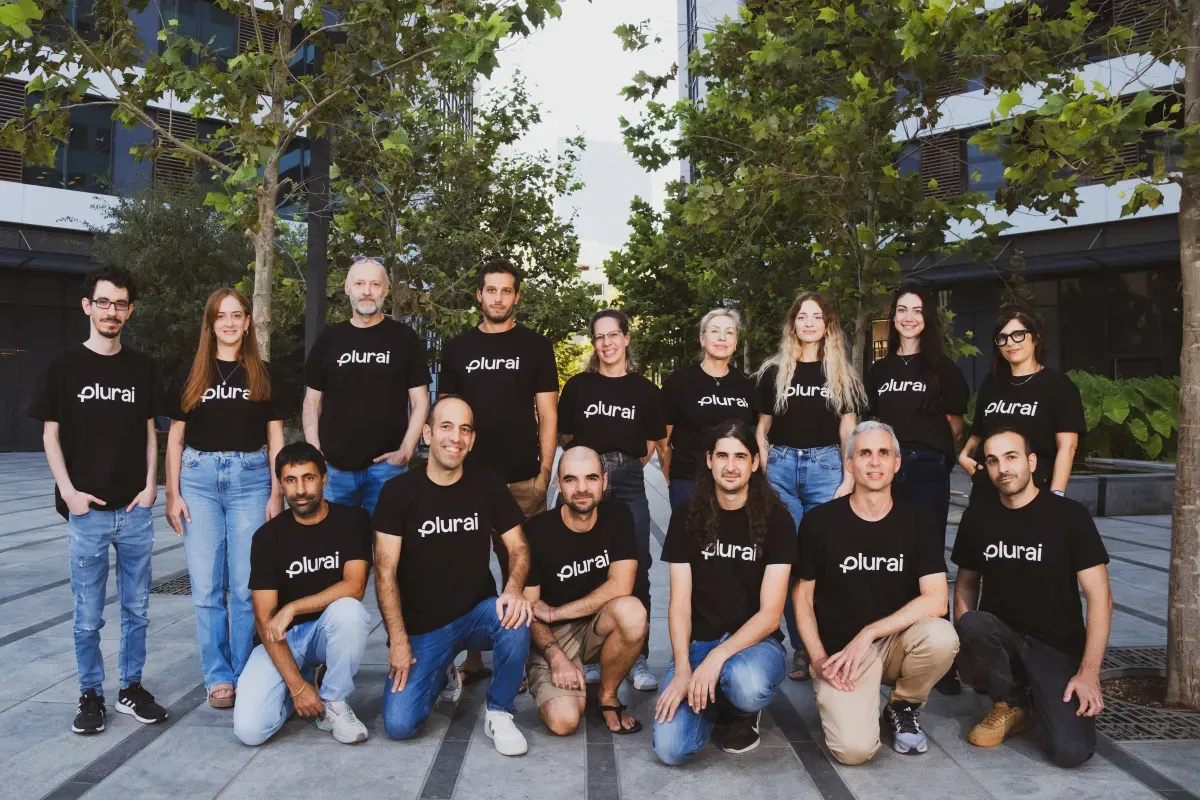
Plurai and the Revolution of AI Agents: Inspired by Autonomous Cars
Artificial intelligence is on the rise, but AI agents are not as capable as one might think. Tests like LiveBench 2.0 reveal that, although models like Claude Fable 5.2 and ChatGPT-6 Astra succeed in 82.9% and 75.6% of tasks, respectively, reliability still leaves much to be desired. However, the startup Plurai is determined to change this scenario, drawing inspiration from the techniques used to develop autonomous cars.
Simulations and Synthetic Data: The Key to Success
Plurai, founded by Ilan Kadar and Elad Levi, bets on simulations with synthetic data to prepare AI models for complex situations. This approach is not new to the founders, who have previously worked at Nexar, a technology company for autonomous vehicles. Kadar, for instance, collaborated with Waymo on simulating autonomous driving software.
The idea is to create a "digital twin" of a company's electronic systems, mapping all possible flows of AI agents. This allows models to be trained to handle extreme cases before being put into production. This technique not only improves the accuracy of agents but also reduces costs, which is crucial in a market where financial efficiency is increasingly valued.
Customization and Efficiency: Plurai's Differentiator
One of Plurai's major strengths is its ability to customize AI models to meet the specific needs of each client. In partnership with companies like Nvidia and Nebius, Plurai has demonstrated that its models can outperform the market's leading models at a significantly lower cost.
Reah Miyara, a researcher at Google DeepMind and an angel investor in Plurai, highlights that the company stands out by understanding failure modes in production and generating synthetic data to adjust the models. In a scenario where IT leaders seek to optimize AI spending, Plurai's approach can be a true competitive differentiator.
AI Agents in Physical and Digital Environments
Plurai believes that the analogy between AI agents in physical and digital environments can be predictive. While general AI models are still not reliable enough for widespread deployment, robots equipped with specific AI models are already in operation, collecting valuable real-world data.
Kadar succinctly summarizes the company's vision: "No matter how smart the models from OpenAI and Anthropic are, they will not know your business and its specific policies." Plurai is determined to fill this gap by offering AI solutions that not only understand but also adapt to the unique needs of each client.
With an initial funding of $13 million led by Team8, Plurai is well-positioned to transform the AI agent market, making them more reliable and accessible for companies of all sizes. The future of AI agents may be closer than we think, and Plurai is at the forefront of this revolution.
Comments (0)
Comments are moderated and if they violate our Terms and Conditions of use, the comment will be deleted. Persistence in violation will result in a ban of your account.