



DeepMind and the New Era of Hurricane Forecasting
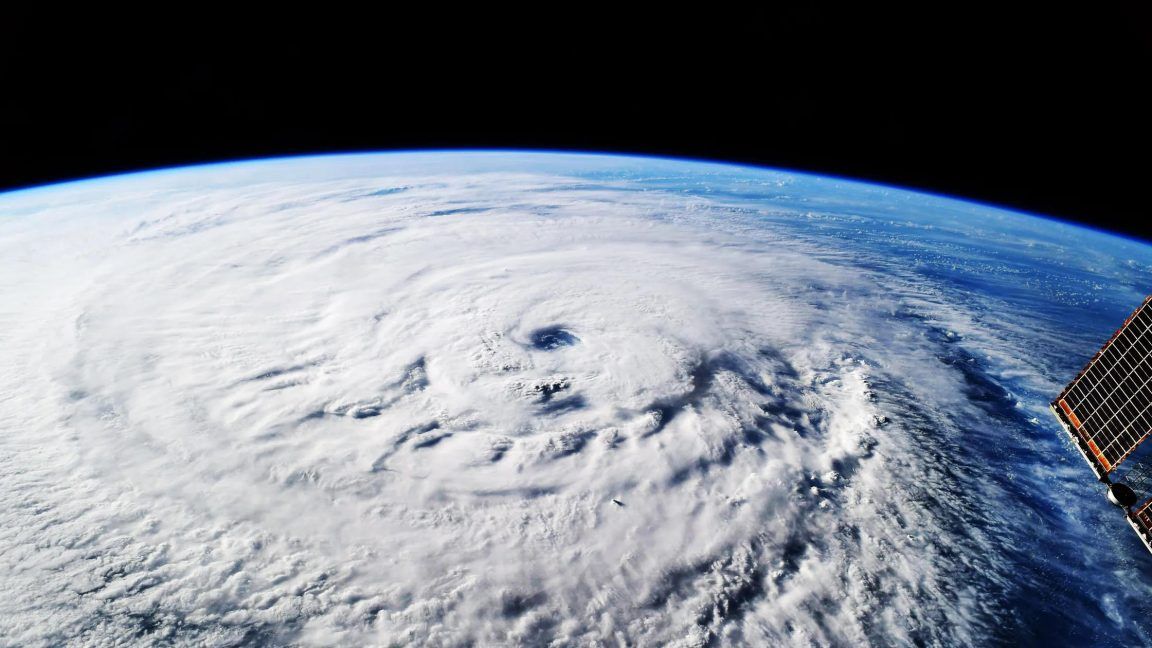
Imagine a storm forming over the Caribbean Sea. Traditional weather models are divided: will it weaken and head towards Haiti, or strengthen and hit Jamaica? It was in this scenario that WeatherNext, an artificial intelligence model developed by DeepMind and Google Research, came into play. With an 80% confidence, it predicted that Hurricane Melissa would strike Jamaica as a category 5 hurricane, five days before making landfall.
The impact was devastating. Floods and landslides swept across Jamaica. But thanks to WeatherNext's early prediction, communities were able to prepare better. This advancement is not just a technological feat; it is a significant shift in how we deal with natural disasters.
The Life-Saving Accuracy
What makes WeatherNext so special is its ability to predict cyclones with unprecedented accuracy. It offers, on average, an extra day of lead time compared to existing models. And that extra day can be crucial. As Mike Brennan, director of the U.S. National Hurricane Center, highlights, "even a few hours can make a difference". Organizing evacuations and moving resources are tasks that cannot wait. The ability to extend the accuracy of the forecast by up to a day is a valuable advancement.
Historically, improving forecasts by a day would take a decade of work. But WeatherNext achieved this by training its model with a combination of general weather data and cyclone-specific data. This is especially challenging because extreme events, like hurricanes, are rare and require specific data for accurate predictions.
The Challenge of Predicting Intensity
Predicting a hurricane's path is already complicated, but predicting its intensity is even more so. This requires data at different spatial scales, from global information about cold fronts and prevailing winds to local atmospheric and oceanic conditions. Kate Musgrave from the Cooperative Institute for Research in the Atmosphere points out that "while previous models predicted the path well, intensity was a weak point".
Hurricane Melissa was a milestone: for the first time, the National Hurricane Center was able to predict a category 5 hurricane when it was still a category 1. This was only possible thanks to WeatherNext, which was tested on retrospective data before being used for live forecasts. The surprise was widespread when the model maintained its performance in real-time.
The Enigma of the AI Model
What intrigues researchers is how WeatherNext manages to make such accurate predictions using lower resolution data than traditional models. Ferran Alet from DeepMind admits that "it's a black box at the end of the day". The model seems to capture something in the low-resolution data that we do not yet fully understand. This opens new possibilities for physics and meteorology.
Moreover, WeatherNext does not provide a single forecast. It generates a range of potential scenarios, capturing possible effects of small variations that can lead to significant changes. Last year, the model created 50 scenarios per storm; now, it generates 1,000. This is something current numerical models cannot do due to computational power limitations.
The Importance of the Human Element
Despite WeatherNext's success, Mike Brennan emphasizes that it is just another tool in meteorologists' arsenal. Hurricane forecasting still relies on the human element to translate data into real impacts. After all, a hurricane is not just a forecast of path or intensity; it is the impacts that truly matter.
In a promising move, Google DeepMind announced that it is making WeatherNext models open-source. This will allow the research community to collaborate and further improve these tools, perhaps even revealing new insights into how cyclones work.
In the end, artificial intelligence is giving us new lenses to understand the laws of the universe. And, in the case of hurricanes, this could mean the difference between life and death.
Comments (0)
Comments are moderated and if they violate our Terms and Conditions of use, the comment will be deleted. Persistence in violation will result in a ban of your account.