



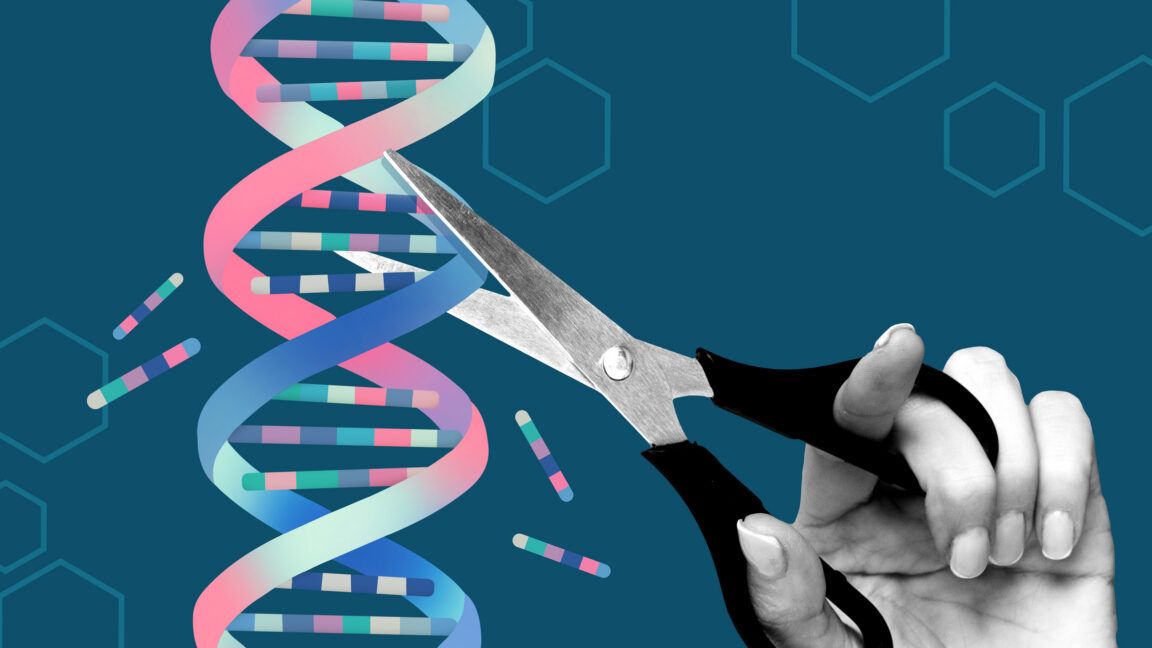
AlphaFold AI revolutionizes the safety of genetic editing
Safety in genetic editing has always been a challenge. Imagine trying to edit a book where repeated words appear randomly. This is how scientists face the vast human genome. Even with precision, genetic editing systems can make mistakes and modify the wrong sequence. These errors, known as off-target effects, are inevitable when many cells need to be edited. But the good news is that researchers are using artificial intelligence to make this process safer.
AlphaFold, Google's protein folding software, is being adapted to identify problematic areas in genetic editing proteins. By modifying these areas, it is possible to reduce unwanted effects. The focus is on proteins that interact with guide RNA and DNA. The guide RNA acts like a GPS that directs where the editing should occur. The Cas protein, in turn, ensures that the editing happens in the right place. However, if there are small errors in pairing, Cas may end up editing the wrong location.
AlphaFold and precision in genetic editing
The research team, based at various institutions in China, decided to use AlphaFold to better understand these problematic interactions. They created a library of off-target editing sites using a modified CRISPR system. The goal was to see how the CRISPR complex interacted with these sites using AlphaFold. Initially, the software had issues, but by simplifying the model, focusing only on DNA, RNA, and the Cas9 protein, they achieved more accurate results.
The researchers discovered that many off-target sites caused the Cas9 protein to adopt a slightly different structure. This is because the amino acids, which are the building blocks of proteins, moved to accommodate the pairing errors. AlphaFold helped identify which amino acids were involved in these interactions. This analysis, called "ContactSeek," allowed for precise mapping of the problematic sites.
Improving precision with ContactSeek
ContactSeek generated an extensive list of amino acids that changed position at off-target sites. The researchers then focused on regions of the Cas9 protein where these amino acids clustered. They tested different versions of Cas9, altering amino acids in these regions. In total, 23 modifications were made, resulting in a variant of Cas9 that maintained normal activity at the correct sites but reduced off-target activity from 28% to 5%.
This approach also worked with another system that uses the Cas12 protein. The success of this method shows that the combination of artificial intelligence with molecular biology can revolutionize the safety of genetic editing. Other research teams have already used different methods, such as directed evolution, to create Cas9 variants less prone to errors. But the use of AlphaFold offers a new powerful tool to enhance the precision of genetic editing.
The application of AlphaFold in genetic editing is a fascinating example of how artificial intelligence can transform science. By improving the safety of genetic editing systems, we are one step closer to more effective and safer therapies. The future of personalized medicine looks increasingly promising, and AI is at the center of this revolution.
Comments (0)
Comments are moderated and if they violate our Terms and Conditions of use, the comment will be deleted. Persistence in violation will result in a ban of your account.