


ChatGPT now alerts parents about misuse by children
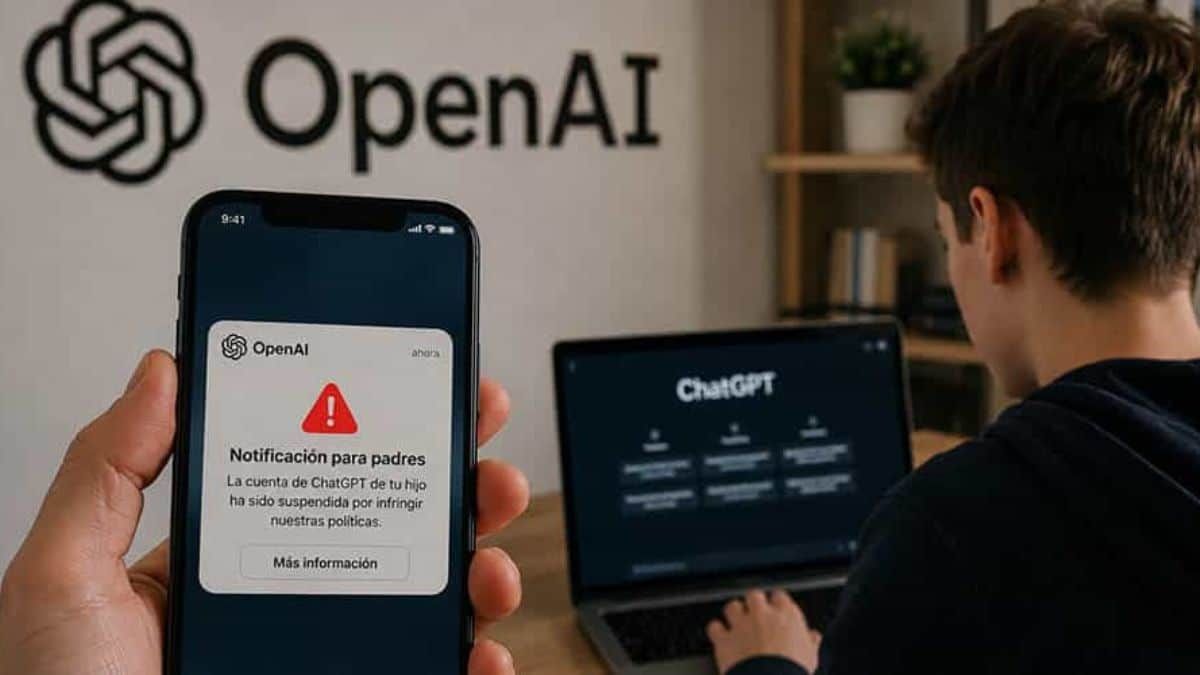
Have you ever wondered who teenagers talk to about their problems when they are alone in their room? The increasingly common answer is an artificial intelligence. In light of this scenario, OpenAI announced that ChatGPT will automatically notify parents if a minor commits serious infractions, focusing on threats, violence, or risk of self-harm. A logical and urgent move.
With millions of students using the tool for school assignments, generating code, or simply passing the time, the line between academic and personal use has blurred. The ease of use of ChatGPT leads young people to spend hours interacting with the chatbot. This prompted Sam Altman's company to take action to protect its most vulnerable users.
A digital shield that is not "Big Brother"
The update responds to the growing social pressure for online child safety. The measure is part of an expansion of parental controls on the platform. But, of course, the eternal debate arises about the right to privacy of teenagers versus the duty of parents to protect them. To avoid crossing the line into domestic spying, OpenAI configured the system not to be a constant informer.
ChatGPT will not bombard parents with notifications for simple queries. If a young person asks about World War II weapons or seeks information about anxiety for a school project, the algorithm does not react. The real alert system only activates when it detects critical risk, sending emails to guardians in the face of behaviors that indicate real danger.
In practice, the tool requires that the teenager's account be linked to that of a legal guardian. This way, adults can manage usage time limits and restrict advanced functions of the model, as well as block access to sensitive content.
The ethical dilemma of AI in mental health
The intervention of artificial intelligence in psychological crises is a minefield. It is no longer uncommon to see young people using AI to channel negative thoughts or discuss self-harm. The problem is that the machine lacks empathy; it only calculates and predicts the next word with precision.
To mitigate this gap, OpenAI engineers are adjusting the pipelines so that ChatGPT detects micro-signals of alert in conversations. The goal is for the platform to interrupt dynamics of personal harm and impose automatic measures on the minor's account. But the company makes it clear: AI does not replace a mental health professional. It acts as a technological tourniquet, not as a cure.
This move shows that the sector recognizes the impact of technological creations on the human psyche. The idea is to intervene only when there are clear signs of danger, balancing physical protection and digital privacy. It remains to be seen whether these filters will work in practice or generate false positives.
Teenagers always find ways to bypass digital restrictions. Now, families have better tools, but also an unprecedented responsibility in educating in the era of conversational algorithms.
Comments (0)
Comments are moderated and if they violate our Terms and Conditions of use, the comment will be deleted. Persistence in violation will result in a ban of your account.